
Description
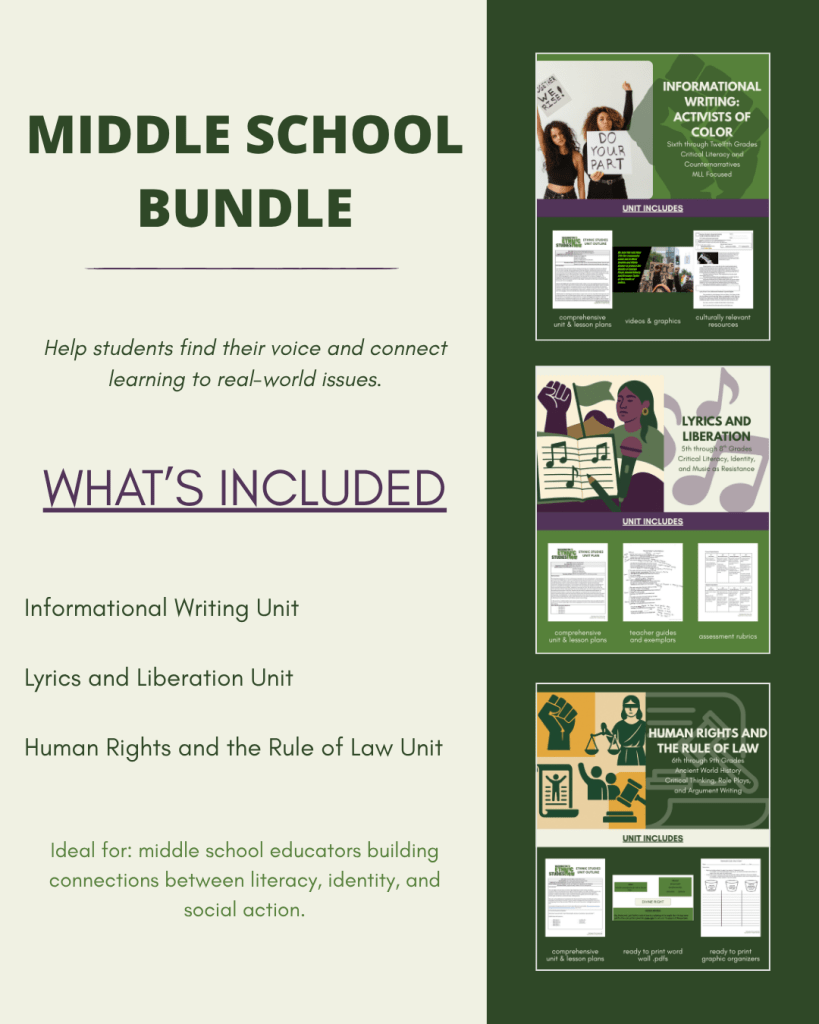
United Nations Universal Declaration of Human Rights transforms a landmark document into a living site of inquiry. As part of the Human Rights and the Rule of Law unit, this lesson moves beyond simply listing rights; it asks students to evaluate the efficacy of global governance and the persistence of systemic harm.
Designed for flexibility, this lesson can span 1 to 5 class periods depending on the depth of research desired. The core activity utilizes a jigsaw protocol where student groups take ownership of specific articles, translating complex legal language into their own words. Students are challenged to not only define these rights but to provide documented, real-world examples of where these protections are being upheld and where they are being violated.
The lesson culminates in a reflective exit ticket or an optional extension project where small groups create presentations to educate their peers on the status of human rights in the 21st century.
What’s Included
-
Detailed lesson plan with options for 1-day intensive or 5-day deep-dive implementation.
-
L3.2 UDHR Booklet printouts featuring the full text of the declaration.
-
Human Rights Group Note-Taking Sheet designed to facilitate critical analysis and evidence gathering.
-
Visual Inquiry Prompts using the L3.1 Image to spark initial inferences about global justice.
-
Formative Assessment Tools including reflection prompts and exit tickets.
-
Alignment with WAESN Elements of Liberation, WA State Social Studies Standards, and C3 Framework.
Why Educators Use This Lesson
-
Promotes Critical Praxis: Encourages students to look for the discrepancy between stated laws and actual practice.
-
Collaborative & Student-Led: The jigsaw strategy ensures every student is an expert and a teacher within their group.
-
Rigorous Evidence Standards: Requires students to cite real-world examples, building high-level research and argumentation skills.
-
Interdisciplinary Reach: Integrates literacy, civics, and history while centering the WAESN framework of action and reflection.
-
Adaptable Pacing: Perfectly suited for a quick overview or a major summative research project.
This is the bridge between understanding the world as it is and imagining a world that honors the dignity of all people.



Reviews
There are no reviews yet.