This selection of peer-reviewed articles comes from the scholarship of current and former WAESN Board Directors and Staff.
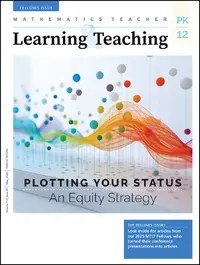
Topic: Mathematics Assessment
Title: Authentic Choice in Mathematical Assessments
Authors: Shraddha Shirude
Journal: Mathematics Teacher: Learning & Teaching PK–12
Publication Date: 2021
In this “Ear to the Ground” feature for Mathematics Teacher: Learning and Teaching PK-12, high school educator Shraddha Shirude challenges the traditional reliance on standardized, written assessments in mathematics education. Shirude argues that mathematics has been stripped of its humanity and treated as a rigid, objective subject requiring mere regurgitation, rather than being recognized as a subjective, ever-changing language used to communicate human ideas. The article critiques current interpretations of Culturally Responsive Teaching (CRT), specifically the use of “choice” in classroom practices.

Topic: Ethnic Studies Mathematics
Title: Radical Love as Praxis; Ethnic Studies and Teaching Mathematics for Collective Liberation
Authors: Cathery Yeh, Ph.D., Ricardo Martinez, Ph.D., Sara Rezvi, Ph.D., & Shraddha Shirude
Journal: Journal of Mathematics Education
Publication Date: 2021
Ethnic studies is a growing movement for curricular and pedagogical practices that reclaim marginalized voices and histories and create spaces of healing for students of color; however, its application to mathematics education has been limited. In this essay, we provide a framework of five ethea of ethnic studies for mathematics education: identity, narratives, and agency; power and oppression; community and solidarity; resistance and liberation; and intersectionality and multiplicity. We describe key concepts and examples of the ethos of ethnic studies.
Topic: Retention of K–12 Educators of Color
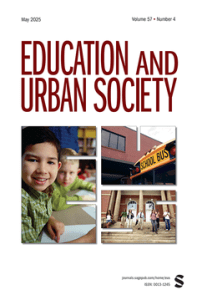
Title: Ethnic Studies, Fugivity, and Retention of K–12 Educators of Color
Author: Tracy Castro-Gill, Ph.D.
Journal: Education and Urban Society
Publication Date: 2025
A shortage of educators of color (EOC) exists in the United States due in part to disproportionate attrition rates for EOC compared to White educators. Little is known about the role curriculum may play in retaining EOC in K–12, urban public schools. This study used qualitative critical narrative inquiry framed by critical race theory to examine how creating and teaching ethnic studies curriculum contributes to EOC’s experiences in the teaching profession and the role ethnic studies curriculum plays in the desire of ethnic studies EOC to stay in their current role and district. The results of the study indicated ethnic studies and fugivity play significant roles in positively influencing the participants’ perceptions of the teaching profession and their desire to stay in the profession.
Topic: Mathematic Poetry
Title: Poetic Mathematical Knowledge, Cultural Connections and Challenging Epistemic Injustice
Authors: Ricardo Martinez, Ph.D., Cayley Carpenter, Ph.D., Katie Johnson, Ph.D., Shraddha Shirude, Zhenji Zhou, Ph.D.
Journal: Teaching for Excellence and Equity in Mathematics
Publication Date: 2025
This article focuses on poetry as a shared point of mathematical reflection, connection, and culture while discussing the importance of the driving force behind liberatory action. Specifically, a math-inspired poetry template will be discussed across multiple learning contexts to highlight the richness of poetry and math. We put forth the idea of Poetic Mathematical Knowledge to provide an entry toward transformational mathematical teaching and learning rooted in resistance, healing, and liberation. Insofar to say that antiracist mathematics must move beyond superficial activities and must focus on the wholeness of students and their communities.
Topic: K–12 Educator Preparation
Author: Tracy Castro-Gill, Ph.D.
Journal: Ethnic Studies Pedagogies
Publication Date: 2025
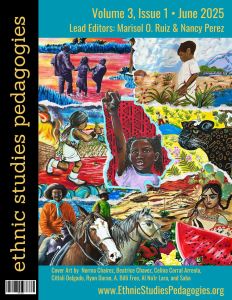
Several K-12 public school districts in Washington state are developing and implementing Ethnic Studies curricula. Despite state legislation mandating a model curriculum, there is a significant gap in educators’ readiness to teach Ethnic Studies effectively. Current teaching endorsements do not require an in-depth understanding of race, racism, indigenous epistemologies, and decolonial frameworks. Research shows that without proper professional development (PD) in these areas, educators may inadvertently harm students, particularly students of color. The Washington Office of the Superintendent of Public Instruction (OSPI) has highlighted the need for PD that promotes anti-racist practices and safe learning environments.
In response, Washington Ethnic Studies Now (WAESN) launched a pilot program in the 2021/2022 school year to develop a K–12 Ethnic Studies specialty endorsement funded by the Professional Educators Standards Board (PESB). The program involved 20 educators and included 36 hours of PD focused on antiracist and decolonial pedagogies. Interviews with participants revealed significant gaps in their pre-service training, especially in practical application and intersectionality. While the pilot increased their confidence, ongoing support is essential. The study emphasizes the need for systemic changes, including a K–12 Ethnic Studies endorsement pathway, to adequately prepare educators. This research underscores that Ethnic Studies is a vital, longstanding discipline requiring dedicated training and attention from policymakers and educational leaders.

Topic: Mathematics Education
Title: We Are Time Travelers: Ethnic Studies Mathematics as Past, Present, and Future Selves
Authors: Shraddha Shirude and Sara Rezvi, Ph.D.
Publication: Proceedings of the forty-seventh annual
meeting of the North American Chapter of the International Group for the Psychology of Mathematics
Education
Publication Date: 2025
We integrate ethnic studies into mathematics education to humanize mathematics learning, especially for students of color who have historically been marginalized. Building on literature and classroom experience, we introduce five interconnected ethos and community–indigeneity and historical–cultural–humanity. Our framework emphasizes the evolving, interconnected, and ancestral nature of mathematical identity as it challenges dominant narratives that separate students from their cultural roots, arguing instead for math as fluid, creative, and rooted in lived experience. Ethnic studies mathematics is a revolutionary praxis: a way to reclaim the inherent mathematical knowledge within all people with math education as a site of healing, resistance, and hope. A combinatorial poetry unit inspired by Indigenous and activist traditions demonstrates how ethnic studies mathematics can inspire critical inquiry and agency.