Description
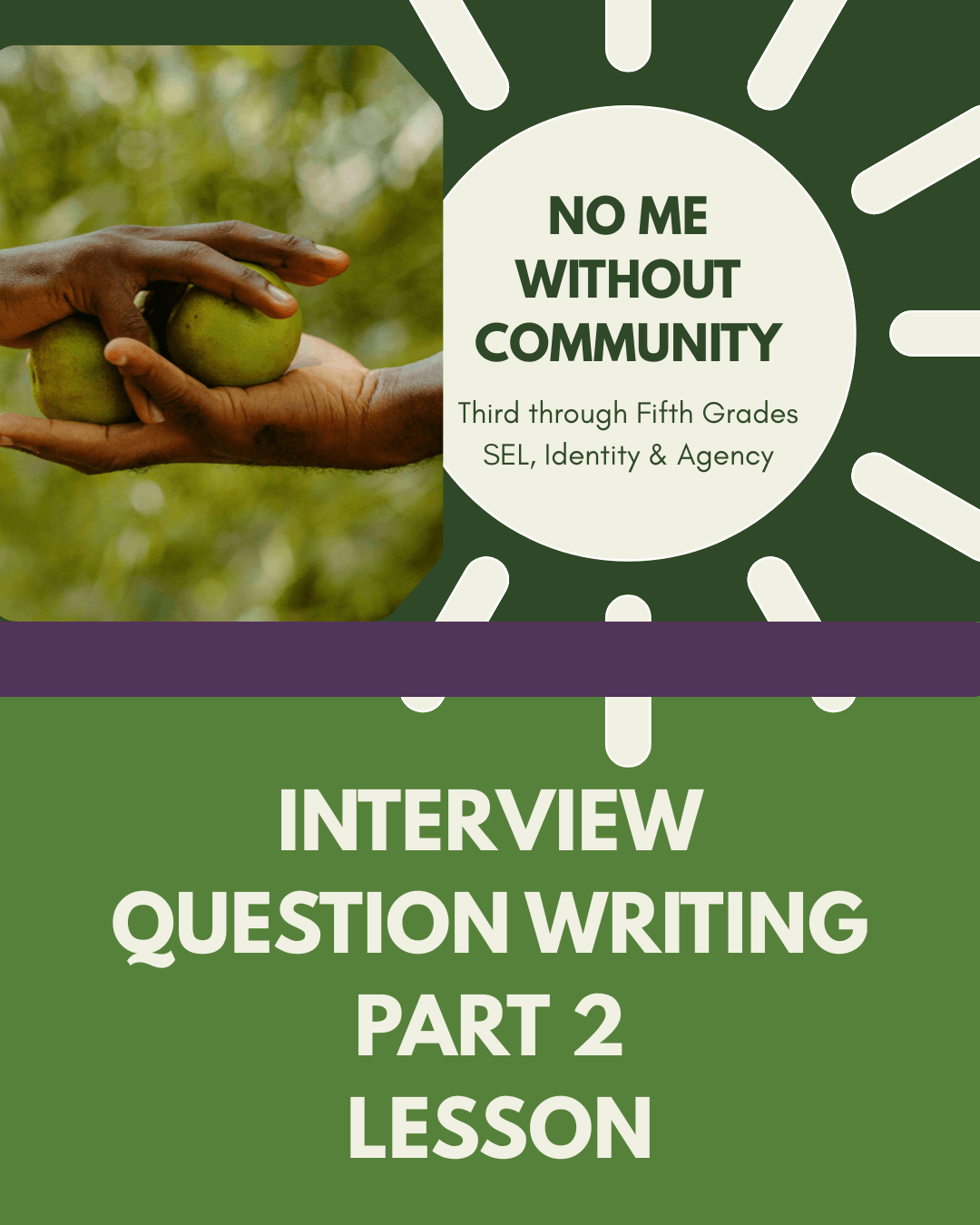
Interview Question Writing: What Do You Want to Know? (Part 2) (Grades 3–5)
Interview Question Writing: What Do You Want to Know? (Part 2) advances students from analyzing questions to actively writing and refining interview questions they will use with family and community members. Grounded in Ethnic Studies and SEL, this lesson emphasizes collaboration, revision, and intentional question design as essential practices for understanding identity and humanity.
Designed for grades 3–5, this 30-minute lesson engages students in whole-group brainstorming and small-group sorting to distinguish between yes/no and open-ended questions. Educators guide students in recognizing that identity is multifaceted, encouraging questions that go beyond surface-level interests to include early memories, family, community connections, assets, and influences.
Students collaboratively revise previously modeled interview questions and co-create a shared set of questions that all students can use, while also allowing space for personalized follow-up questions. The lesson concludes with students identifying who they will interview, reinforcing accessibility and flexibility by validating school-based community members as meaningful interviewees.
What’s Included
-
Step-by-step lesson plan focused on question writing and revision
-
Structured brainstorming and group sorting activities
-
Guidance on open-ended vs. yes/no questioning
-
Asset-based interview categories aligned to identity
-
Preparation for student-led community and family interviews
-
Alignment with WAESN Elements of Liberation and OSPI SEL Standards
Why Educators Use This Lesson
-
Strengthens student voice, collaboration, and agency
-
Teaches revision as a critical thinking skill
-
Reinforces asset-based approaches to identity
-
Prepares students for meaningful, student-led interviews
-
Supports SEL, empathy, and community connection
This lesson is ideal for educators seeking developmentally appropriate, community-rooted Ethnic Studies instruction that helps students ask thoughtful, respectful questions and honor the complexity of people’s lived experiences.


Reviews
There are no reviews yet.