Description
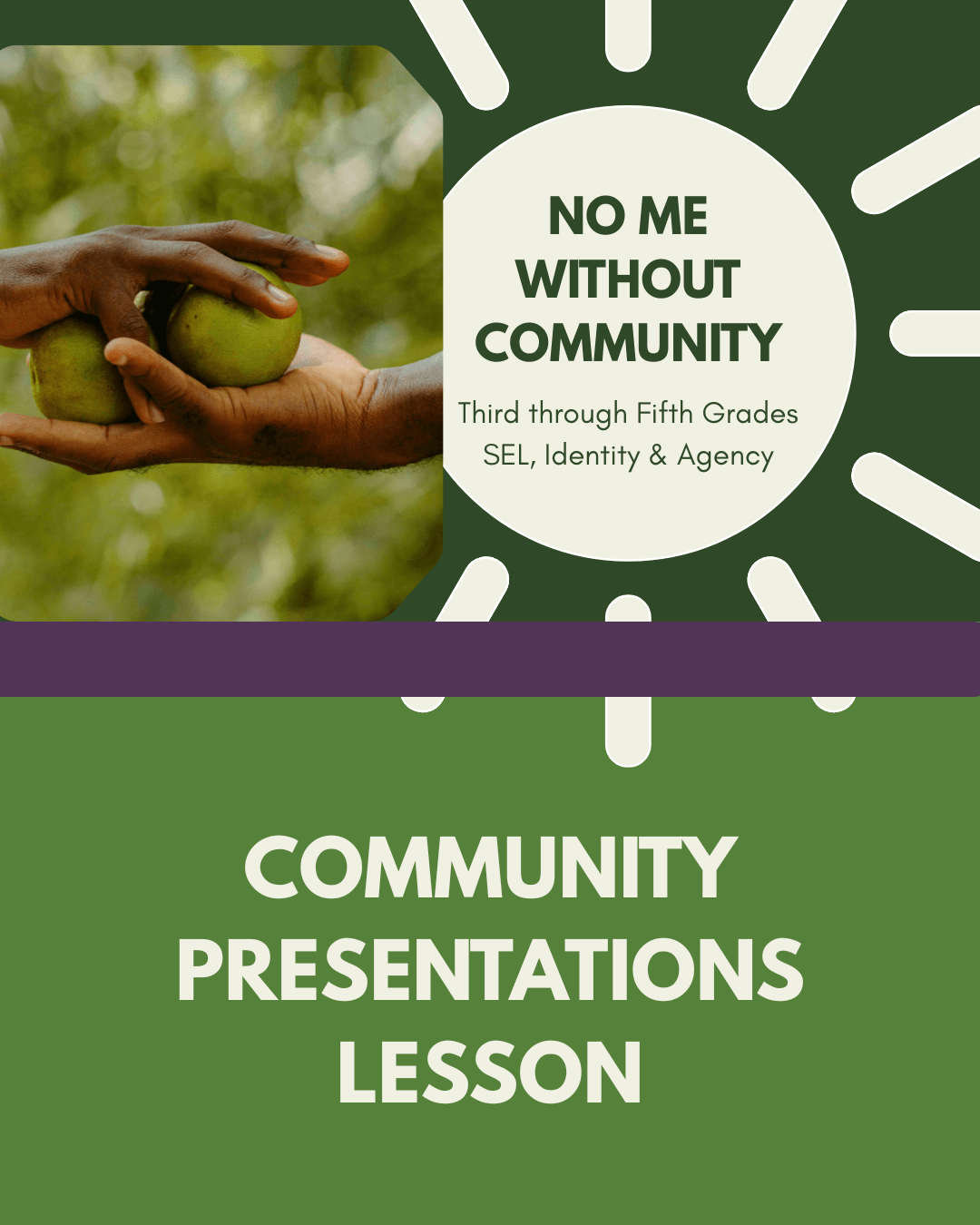
Community Presentations serves as the final collective learning experience in the No Me Without Community unit, bringing together students’ work on identity, family, community, and cultural wealth. Grounded in Ethnic Studies and SEL, this lesson emphasizes collaboration, reflection, and the understanding that identity is formed through shared relationships and collective experiences.
Designed for grades 3–5, this lesson is intentionally flexible, unfolding over 15–30 minute sessions across multiple days. Student table groups present interviews with selected community members—often people who work within the school community—to ensure accessibility and sustainability. As peers listen, they use Mind Map graphic organizers to capture key aspects of each interview, including early memories, family, community connections, assets, and interests.
Educators guide students in revisiting observation charts, inquiry charts, and pictorial input maps from earlier lessons, supporting synthesis across the unit. Through discussion and Learning Log reflection, students articulate how community assets contribute to both personal identity and collective belonging, reinforcing the idea that communities function as extended families.
What’s Included
-
Step-by-step lesson plan designed for multi-day implementation
-
Structures for student-led community interviews and presentations
-
Integration of GLAD Inquiry Charts and Pictorial Input Charts
-
Mind Map and Learning Log reflection tools
-
Emphasis on collective identity, agency, and cultural wealth
-
Alignment with WAESN Elements of Liberation and OSPI SEL Standards
Why Educators Use This Lesson
-
Centers collective learning and shared responsibility
-
Honors community members as sources of knowledge
-
Reinforces asset-based identity development
-
Supports reflection, empathy, and civic awareness
-
Provides a meaningful, community-centered unit conclusion
This lesson is ideal for educators seeking developmentally appropriate, community-rooted Ethnic Studies instruction that helps students synthesize learning, honor community knowledge, and understand identity as relational and collective.



Reviews
There are no reviews yet.