Description
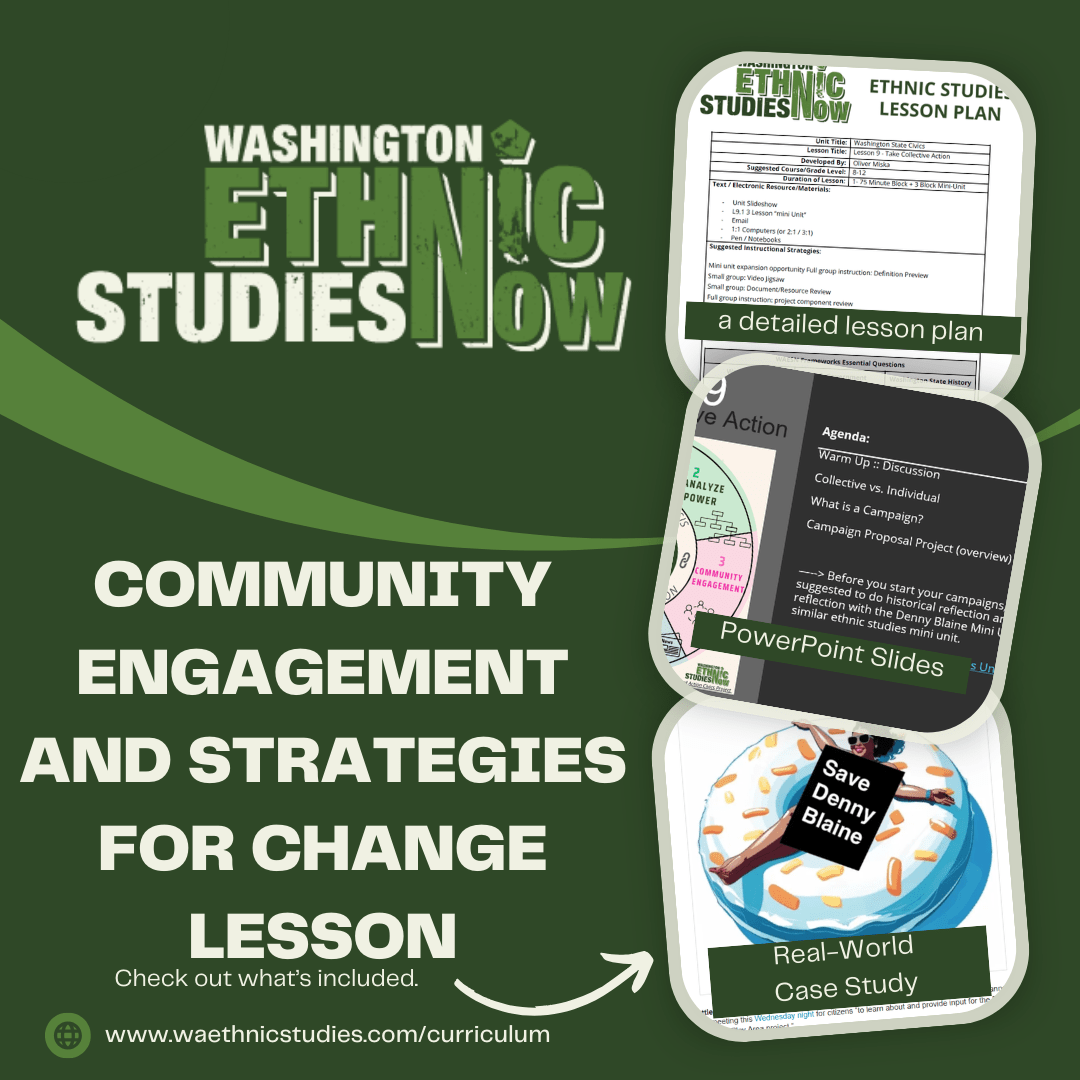
Community Engagement and Strategies for Change provides students with the professional toolkit used by state-level advocates. In this lesson, the abstract idea of making change becomes a concrete set of tasks. Students move beyond just knowing who their representatives are to actively tracking the bills those representatives are voting on and planning how to engage with them.
Designed for two extended blocks, the lesson features a deep dive into the wa.leg.gov website. Students watch professional tutorials and then apply that knowledge to populate their own Legislative Trackers, categorizing stakeholders and monitoring bill progress. The second half of the lesson focuses on internal team power: students are introduced to Meeting Facilitation tools, learning how to use a formal agenda to manage their advocacy teams, assign tasks, and develop a coherent Community Engagement Strategy using the Integrated Action Civics Project (IACP) framework.
What’s Included
-
Detailed 150-minute lesson plan (split into two blocks) covering digital research and professional facilitation.
-
Unit Slideshow (Slides 42-50) including website tutorials and examples of student-led legislative trackers.
-
L4.1 Meeting Agenda Template to scaffold student-led work sessions and professional communication.
-
L4.2 Legislative Tracker Template for monitoring bills, sponsors, and stakeholder stances in real-time.
-
WA.LEG.GOV Navigation Guide to help students find bill text, fiscal notes, and committee hearing schedules.
-
Stakeholder Identification Workshop focused on refining the Community Engagement component of their final proposals.
-
Alignment with WAESN Elements of Liberation (Agency & Critical Reflection) and Washington State K-12 Social Studies standards for civic involvement.
Why Educators Use This Lesson
-
Teaches Transferable Skills: Professional meeting facilitation and project tracking are high-value skills in college, careers, and community organizing.
-
Direct Application: Students aren’t just learning about trackers; they are building one for their specific social justice issue.
-
Promotes Group Accountability: The use of formal agendas helps prevent group work fatigue by clearly defining roles and deadlines.
-
High-Level Digital Literacy: Students learn to navigate one of the most complex (and powerful) government databases in the state.
-
Builds Campaign Stamina: Shows students that successful advocacy is about consistent tracking and organized community outreach, not just a one-time protest.
This is the lesson that turns a student’s passion into a professional, organized movement for change.



Reviews
There are no reviews yet.