Description
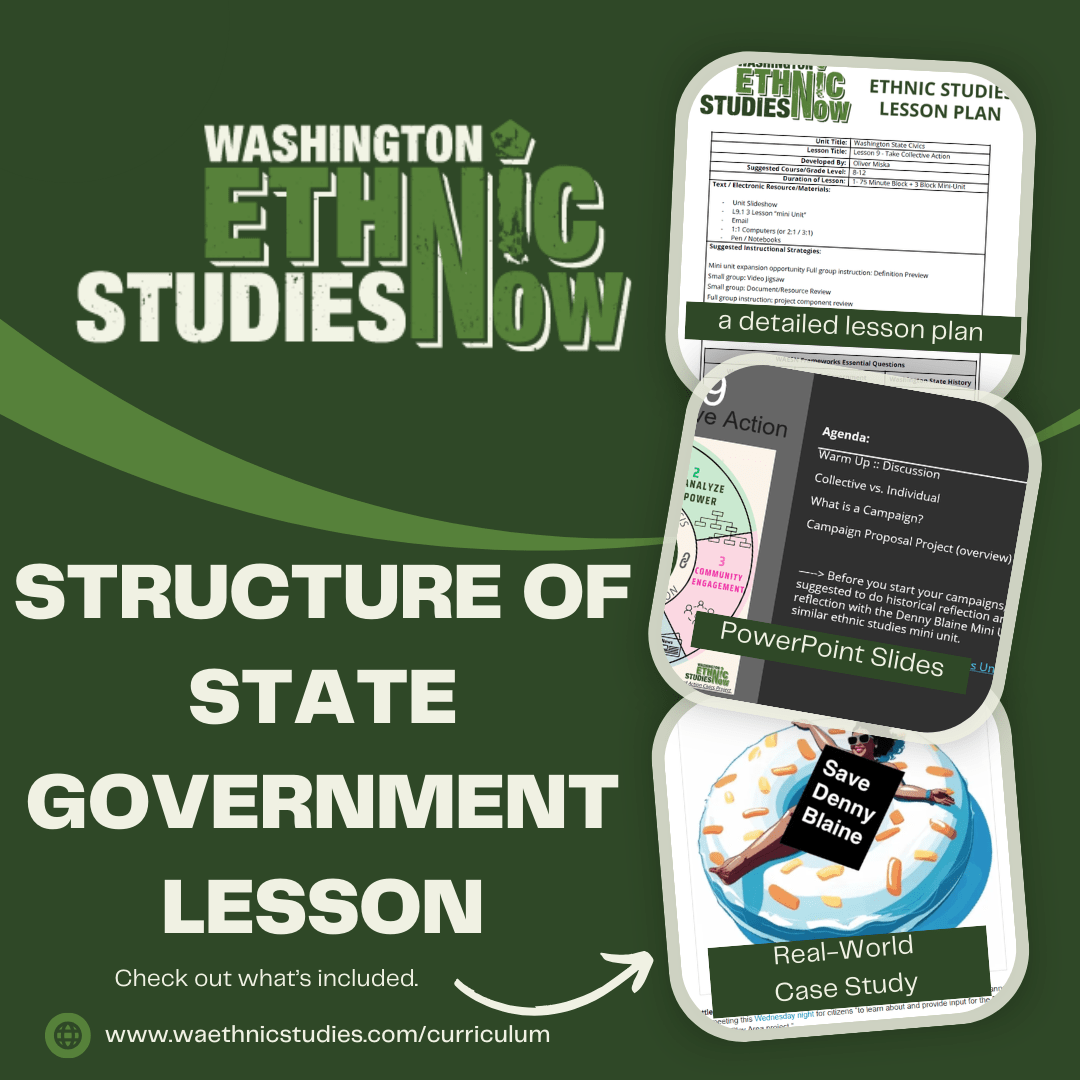
Structure of State Government provides students with the technical literacy required for effective advocacy. Understanding who to talk to is useless if you don’t know when and how they meet. This lesson focuses on the biennial structure of the Washington State Legislature and the massive network of agencies—from the OSPI to the Department of Ecology—that turn laws into lived reality.
Designed for a flexible 1-2 block period, the lesson guides students through the Life Cycle of a Session. They learn the difference between the long session (120 days) and the short session (90 days) and why that timing is critical for any advocacy campaign. The lesson culminates in a Power Mapping Scavenger Hunt, where students use local government websites and the Integrated Civic Action Project (ICAP) tools to find the specific offices and officials relevant to their chosen social justice issues.
What’s Included
-
Detailed 75-150 minute lesson plan with protocols for full-group instruction and independent digital research.
-
Unit Slideshow (Slides 31-41) featuring organizational charts of state agencies and the legislative session timeline.
-
Legislative Biennium Guide explaining the 2-year cycle and the alternating 90/120-day sessions.
-
Power Mapping Scavenger Hunt 2.0—a digital resource focused on local government levels and administrative agencies.
-
IACP Advocacy Integration—instructions for using professional-grade power mapping tools for student proposals.
-
Alignment with WAESN Elements of Liberation (Agency & Critical Reflection) and Washington State K-12 Social Studies standards for civics and government structure.
Why Educators Use This Lesson
-
Navigates Complexity: Breaks down the alphabet soup of state agencies (SBE, PESB, OSPI) into understandable roles.
-
Teaches Political Timing: Helps students realize that advocacy has a season, teaching them to plan their campaigns around the actual legislative calendar.
-
Hands-On Digital Literacy: Moves beyond theory by requiring students to find real names, addresses, and committee assignments on official state websites.
-
Foundational for Projects: This is the forming stage where teachers are encouraged to finalize student advocacy teams and begin drafting final power maps.
-
Connects Local to State: Shows the direct link between local school boards or city councils and the state-level mandates they follow.
This is the lesson that moves students from knowing what is wrong to knowing exactly which office they need to call to fix it.



Reviews
There are no reviews yet.