Description
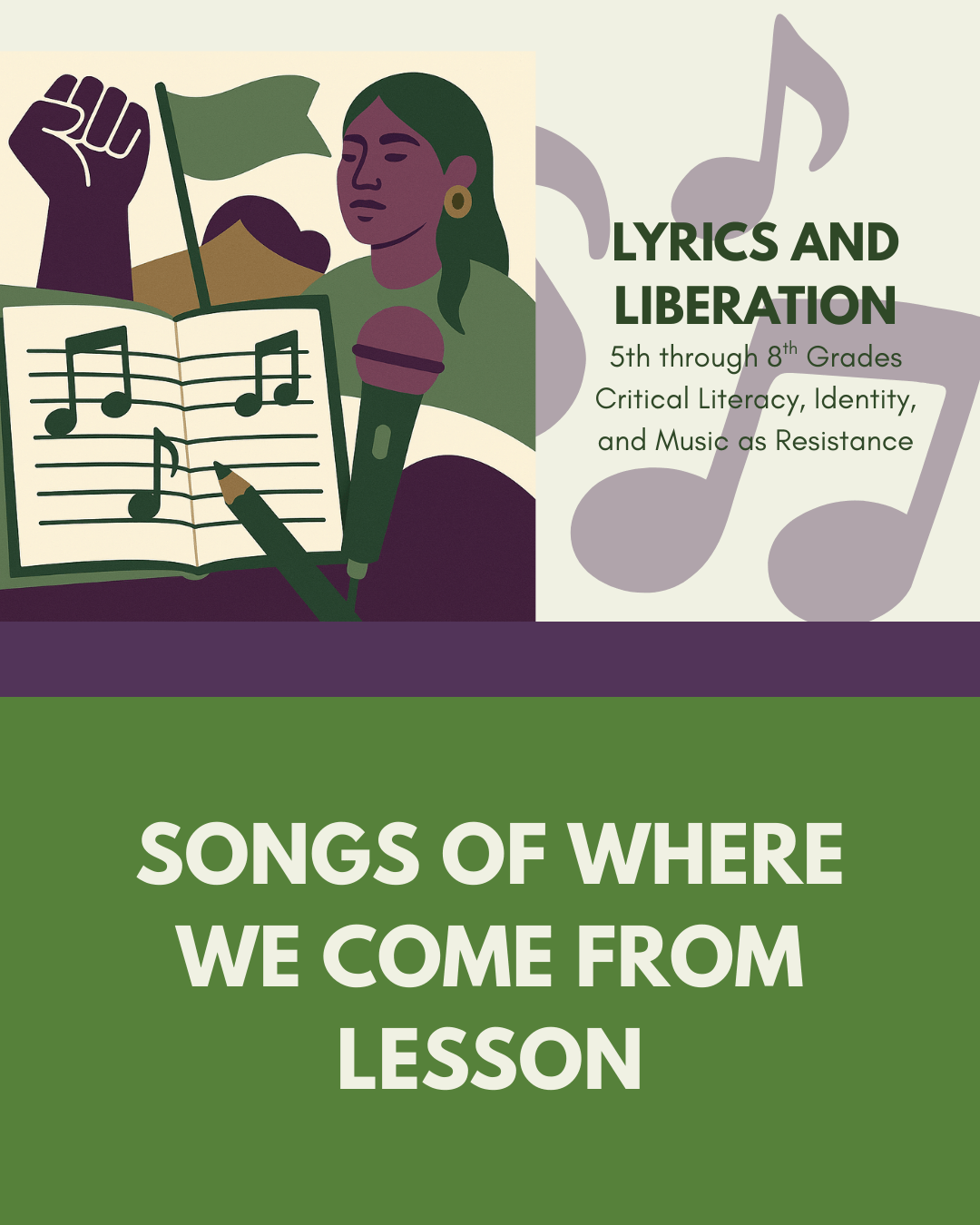
Songs of Where We Come From introduces students to music as a powerful literary text that carries history, memory, and identity. Grounded in Ethnic Studies and ELA literacy practices, this lesson helps students explore how family, ancestors, and place influence the music we listen to—and the stories it tells.
Designed for grades 5–8, this 50-minute lesson centers close listening and annotation of the song “Time Traveler” by Lyla June. Students begin with reflective writing about the role of music (or other cultural practices) in their own lives, then learn how to annotate lyrics for meaning, emotion, questions, and big ideas.
The lesson intentionally honors authentic listening by playing the song twice—first for emotional connection, then for close reading—while modeling annotation strategies to support students who are new to reading artistic texts. Students work collaboratively to identify big ideas related to ancestry, healing, resistance, and lineage, before participating in a student-led whole-class discussion.
The lesson concludes with a written exit reflection that encourages deeper thinking about how artists embed meaning within their work and how music can act as a bridge between past and present.
What’s Included
-
Complete lesson plan with pacing and educator guidance
-
Lyrics to “Time Traveler” by Lyla June for student annotation
-
Optional Big Idea mini handout
-
Suggested annotation modeling and discussion strategies
-
Exit ticket prompts for formative assessment
-
Alignment with WAESN Elements of Liberation and Common Core ELA Standards (Grades 6–8)
Why Educators Use This Lesson
-
Introduces close reading through music in an accessible way
-
Builds annotation and discussion skills
-
Centers identity, ancestry, and place without requiring disclosure
-
Encourages authentic student-led conversation
-
Minimal prep with high engagement
This lesson is ideal for educators seeking upper elementary or middle school ELA curriculum that blends literary analysis, cultural reflection, and Ethnic Studies frameworks through music.





Reviews
There are no reviews yet.