Description
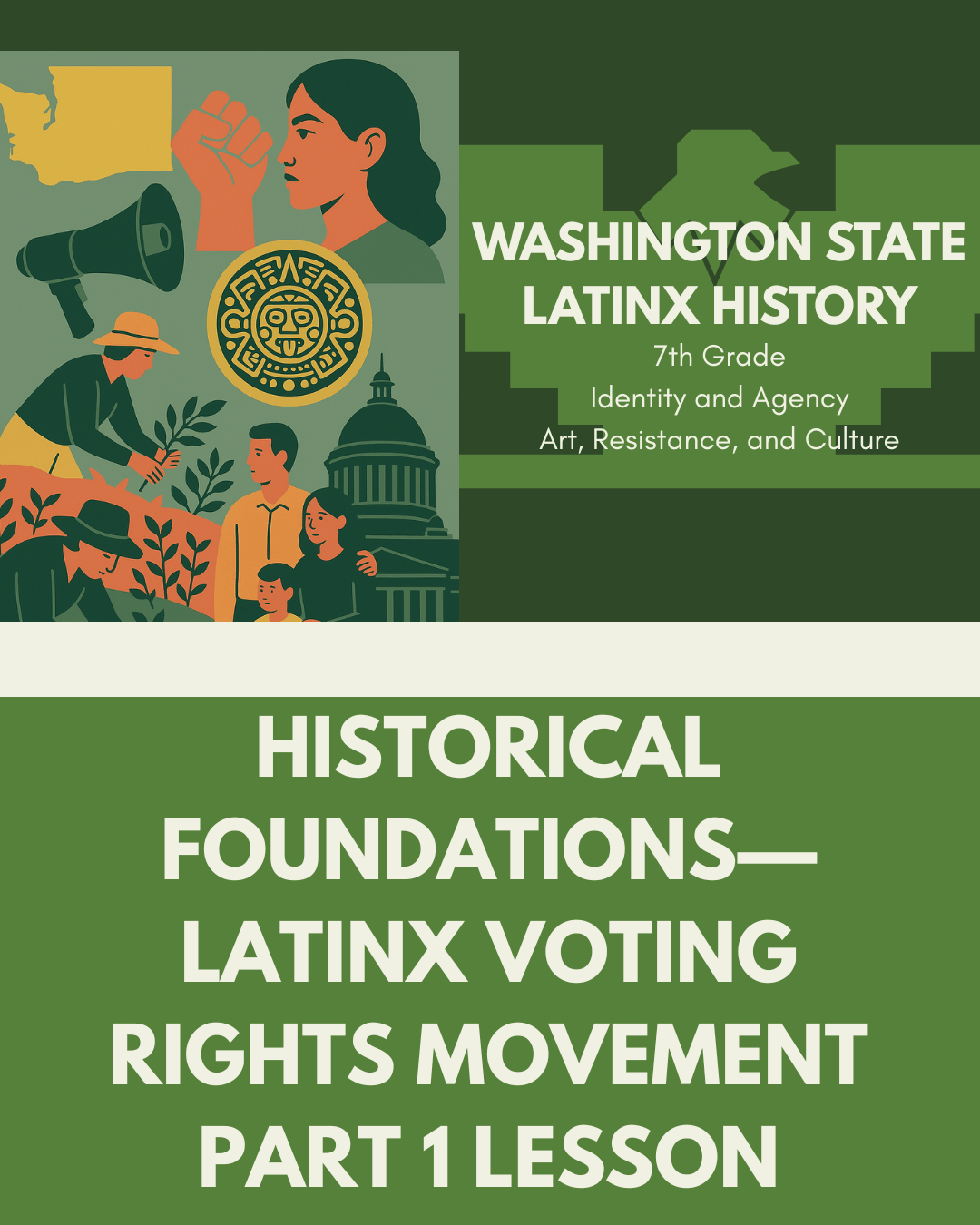
Latinx Voting Rights Movement (Part 1) pulls back the curtain on the hidden history of voter suppression in the Pacific Northwest. While many students associate literacy tests with the Jim Crow South, this lesson proves that Washington State utilized similar tactics to exclude citizens with limited English skills from 1896 until 1970. This lesson centers on the Power and Oppression and Resistance and Liberation frameworks by examining how language was weaponized to silence a growing demographic.
Designed for a 90-minute block, the lesson begins by comparing modern voter qualifications with those established in the early 1900s. Students conduct a deep-dive analysis of Amendment 2 to the State Constitution, which mandated that voters be able to read and speak the English language. The core of the lesson is the analysis of Rodolfo Alaniz’s 1964 sworn statement, a powerful primary source where a citizen describes being repeatedly denied his right to vote despite passing his driver’s license test in English.
What’s Included
-
Detailed 90-minute lesson plan with structured discourse support for navigating the history of racial discrimination.
-
Primary Source Analysis Module featuring the 1896 Washington State Constitutional Amendment.
-
“Affidavit of Rodolfo Alaniz” Activity—a curated testimony illustrating the inconsistent and discriminatory enforcement of literacy tests.
-
Comparative Voter Eligibility Worksheet to bridge historical laws with contemporary Secretary of State guidelines.
-
Reconstruction Era Integration featuring video analysis of how literacy tests were used nationally to bypass the 14th and 15th Amendments.
-
Guided Discourse Prompts to help students infer the socio-political impact of being voiced out of government representation.
-
Alignment with WAESN Elements of Liberation (Power/Oppression & Resistance/Liberation) and C3 Framework for Social Studies standards.
Why Educators Use This Lesson
-
Corrects Historical Myths: Challenges the perception that Latinx people are recent immigrants by documenting their presence and struggle for rights as early as the 1790s.
-
Develops Historian Skills: Students don’t just read about history; they interpret conflicting sources and infer intent from legal affidavits.
-
Connects Local to National: Shows how national movements like Reconstruction influenced specific discriminatory laws right here in Washington.
-
Centers Civic Agency: Explains that the government of the people only works when everyone has a voice, setting the stage for Part 2’s focus on mobilization.
-
Scaffolded for Inclusion: Encourages small-group roles (note-takers, spokespersons) to ensure all students feel safe and supported during complex discussions.
This is the lesson that shows students that the right to vote was never just given—it had to be protected and fought for.



Reviews
There are no reviews yet.