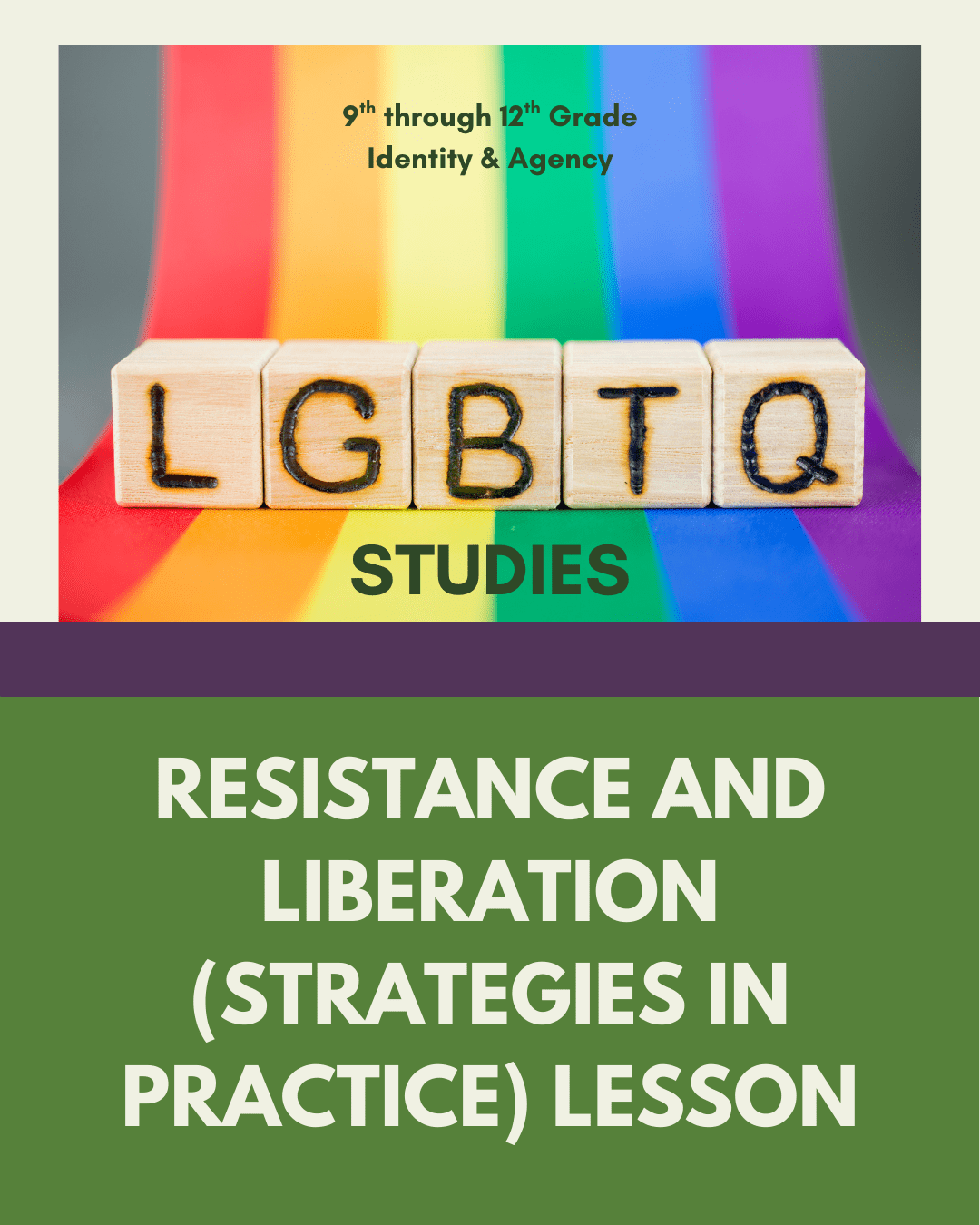
Description
Resistance and Liberation (Strategies in Practice) deepens students’ understanding of how LGBTQ movements have pursued liberation by examining specific strategies of action. Building directly on the conceptual foundations from Lesson 7, this lesson shifts students from broad understanding to applied analysis.
Designed for grades 9–12, this 75-minute lesson engages students in small-group and whole-group discourse as they explore real-world examples of resistance and liberation strategies. Using the resource “26 Ways to Be in Struggle,” students analyze multiple approaches to social change, such as advocacy, organizing, mutual aid, policy change, and cultural work.
Students reflect on the differences between activism and organizing, evaluate the effectiveness and risks of various strategies, and consider how intersectionality shapes both access to and outcomes of resistance. The lesson creates space for ethical questions, emotional responses, and critical self-reflection—emphasizing that liberation work is collective and that everyone contributes in different ways.
This lesson prepares students for upcoming action-oriented learning by helping them identify strategies that align with their values, capacities, and community contexts.
What’s Included
-
Slide-based lesson with educator facilitation guidance
-
Small-group and full-class discussion protocols
-
Structured analysis of real-world resistance strategies
-
Resource integration: 26 Ways to Be in Struggle
-
Reflection prompts centered on agency and ethics
-
Alignment with WAESN Elements of Liberation, Washington State Social Studies Standards, and C3 Framework
Why Educators Use This Lesson
-
Moves students from theory to practical analysis
-
Clarifies differences between activism and organizing
-
Supports nuanced, intersectional discussion of social change
-
Encourages reflection on student agency and ethics
-
Requires minimal preparation with high student engagement
This lesson is ideal for educators seeking high school LGBTQ Studies curriculum that helps students understand how liberation work happens in practice—and how they might engage thoughtfully and responsibly.



Reviews
There are no reviews yet.