
What The Boys Teaches Us About Pro-Social Shame in K–12 Education
Part 1
I recently completed the Amazon Prime series, The Boys. Its premise and the character arc of the primary antagonist, Homelander, helped me articulate an issue I have long observed regarding zero-shame initiatives in K–12 schools. Although Homelander is fictional, the pattern of his behaviors is not. We see it playing out in the political arena and in K–12 schools.
***Spoiler Alert***
Homelander is a “supe” (superhero) created in a lab by the pharmaceutical corporation Vought, serving as both a scientific and social experiment. The non-supe leaders of Vought needed a way to control a virtually indestructible supe, so they intentionally conditioned him to need and seek out approval and love. They achieved this by subjecting him to physical and psychological torture as a child, interrupted only by brief, calculated bursts of approval from parental figures. He never knew his biological parents. You see, the scientists and leaders of Vought understood that humans evolved to be social creatures with a biological need to belong to a group for survival. Humans will do almost anything to remain part of the group, and Homelander was not an exception.
As an adult, Vought further conditioned Homelander to be a super celebrity, hanging on every shift in public perception and approval. They staged events for him to show off his superpowers. They marketed him as a home-grown patriot steeped in traditional American values. As a man, he was tall, muscular, blonde, blue eyed, and overtly Christian. In the beginning, most everyone loved him. In the beginning, he behaved as if he were truly good and decent, because Vought controlled him like a puppet using their very effective conditioning and treating polling points as social approval.
After a while of being treated like a baby (sometimes literally with his need to be infantilized), he grew tired of being invincible with no real power. A series of events starting with a xenophobic rant about being anti-apologist during a televised birthday special leads Homelander to understand his true power as a social elite, not just a supe. Vought was concerned his ratings would plummet, thus their stock prices. However, Homelander’s approval ratings surged thanks largely to the dominant hegemony of cis, straight, white, Christian males.


While introducing his son, Ryan, to the public, a member of the Homelander opposition group, Starlighters, threw something that hit Ryan. Homelander reacted out of instinct and lasered the man to death in front of the crowd. There’s a small silence when Homelander realized what he’d done and began to panic. Then, a white man begins to slow clap. The rest of the crowd follows. Homelander smiles. He had become a god with no anchor.

For Homelander, his true power lies in his social identity, not his superpowers. His true liberation from accountability is the lack of moral friction. In that slow clap he escaped the confines of shame that had controlled him and learned he no longer had collective boundaries—no emotional or social penalties. From that point on, he existed outside of the social contract.
Homelander as Trump
It’s not hard to see the comparison being made in The Boys between Homelander and Trump. Trump’s identity ticks off all the hegemonic privilege markers that Homelander does. Like Homelander, Trump was born into a social class that required certain behaviors to gain approval. As an adult, Trump became a celebrity like Homelander and became obsessed with approval ratings.
Trump has repeatedly dodged social shame, being elected president twice after multiple legal disputes over racial discrimination, unpaid labor contracts, and sexual assault cases. He’s said horrendous things like being a celebrity allows him to get away with anything—the whole, “grab them by the pussy,” comment, mocking disabled people openly, and the infamous quote, “I could stand in the middle of Fifth Avenue and shoot somebody, and I wouldn’t lose any voters.” It’s hard to believe that there are people out there who watch The Boys and don’t understand Homelander is an allegory of Trump, but there are.
And just like Trump, Homelander uses the tried and true Southern Strategy, a racist, dog-whistle campaign strategy created by Richard Nixon’s political strategist, Kevin Phillips. It’s how seemingly innocuous phrases like, “anti-apologist,” “America first,” “law and order,” and, “make America great again,” become synonymous with targeting and eliminating racialized minorities, im/migrants, and gender and sexual minorities. Nixon may have been the first to deploy it, but Trump has mastered it.
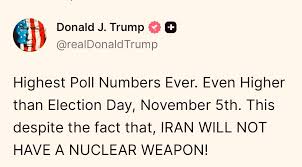
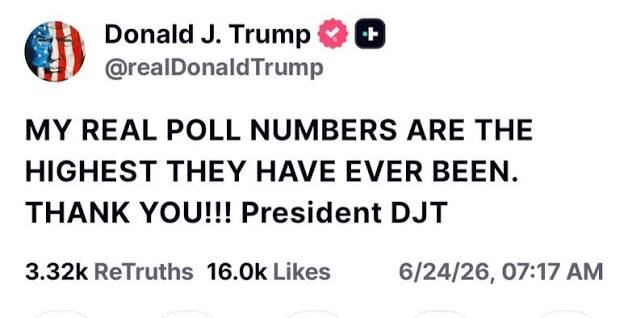

It’s important to draw these comparisons between Homelander and Trump to demonstrate that this isn’t an academic or intellectual hypothetical. The Boys takes things to the extreme, yes, which is often what allegories do. But the political stakes are tangible and happening in real time. More importantly, we’re training new generations of privileged classes and identities to follow the same route in our classrooms through zero-shame initiatives.
The Spectrum of Shame:
Toxic Shame vs. Pro-social Shame
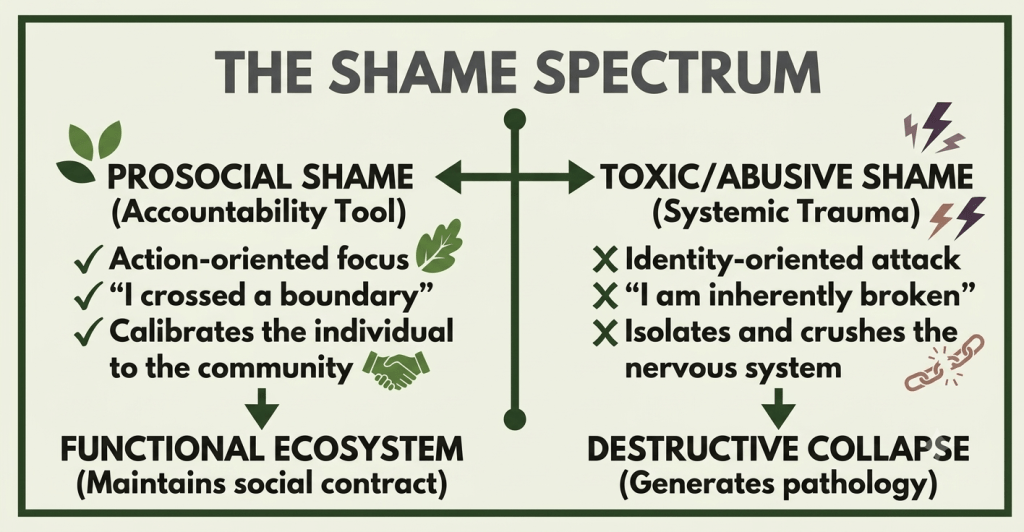
Before I dive into my critique on zero shame initiatives in K–12 schools, I present the spectrum of shame. The spectrum goes from what we’ll call pro-social shame on one end to toxic shame on the other. We can also call this group accountability vs attacks on personhood. Pro-social shame is action oriented. It is a social mechanism used to hold members of a group accountable to their actions. Toxic shame attacks the individual, not their actions, and produces deep and lasting harm to the individual and the group (Dempsey, 2017).
Toxic shaming produces a sense of shame in an individual, while pro-social shame produces guilt. Shame spirals inward, while guilt is the doorway to repair. The goal of pro-social shame is to let the individual know, “I did something wrong that needs to be fixed,” while toxic shame signals, “I am wrong. I am defective, and there’s not much I can do about it.” Not all shaming is equal, and not all shaming is negative (Leach & Cidam, 2015). Think of pro-social shame as the verb that a community does when it is harmed and toxic shame as a noun that an individual holds when their personhood is attacked.
When an individual violates the social contract and community expectations, true accountability requires that person to feel the painful recognition of their actions (Tangney et al, 2007). If they don’t, the community risks performative reparation or no reparation at all. The individual also risks losing the relational standing in that community, which can have lasting negative consequences. When the shame and feelings of guilt are tied to the actions that can be repaired, it supports accountability and social welfare (Sznycer et al, 2016). All or nothing initiatives are rarely effective. The same is true with zero-shame initiatives. When we remove the accountability mechanism of pro-social shame, we are stripping communities—including classrooms—of the very social feedback required for repairing a healthy community.
Pro-Social Shame and Evolutionary Psychology
Humans evolved to be social creatures. Belonging to a group increased access to safety, resources, reproduction, and survival. In early iterations of evolutionary development, shame likely functioned as an adaptive behavior to threaten individuals’ exclusion from social groups when their behavior stepped outside the agreed upon social norms. The felt pain of shame helped signal feelings of guilt and regret that compelled the individual to correct or repair the harm they created to the group. The painful fear of being excluded—of being presented with a life or death dilemma—was entirely the point (Sznycer et al, 2016). Expressing feelings of guilt was the way for the individual to earn their way back into the group, and thus safety (Landers & Sznycer, 2022). This dynamic plays out in the classroom during the most influential years of human development. Whether we are teaching them directly or they are learning through trial and error, K–12 students are always learning what threatens belonging, what restores it, and who is exempt from accountability altogether.
The Homelander allegory teaches us that when power is not constrained by meaningful—and often painful—accountability, socially powerful people are more likely to mistake impunity for moral permission. Toxic shame should be avoided, but zero-shame initiatives swing the pendulum too far. A community without any shame has no internal accountability system. A community ruled by toxic shame has no safety. Both are failures, and both lead to toxic communities that ultimately reward toxic behaviors as we saw in the crowd that cheered Homelanders violence and anti-apologist rhetoric.
Part Two
I always end up setting out to write a single blog post, but I nerd out so hard on the topic, and it deserves space to breathe. To give the reader time to metabolize and reflect, this first piece lays the foundation framing it with the Homelander allegory and the psychology of shame. Part 2 will move from theory to practice and include vignettes of my experiences in teaching that exemplify exactly what I’m talking about with zero-shame initiatives. I’ll also touch briefly on restorative justice practices: what they’re supposed to be and how we get them wrong, because shame is a central part of restorative justice.
See you next month!
REFERENCES
Dempsey, H. L. (2017). A comparison of the social-adaptive perspective and functionalist perspective on guilt and shame. Behavioral Science, 7(4), 83. https://doi.org/10.3390/bs7040083
Landers, M. & Sznycer, D. (2022). The evolution of shame and its display. Evolutionary Human Science, 4(e45). https://www.doi.org/10.1017/ehs.2022.43
Leach, C. W. & Cidam, A. (2015). When is shame linked to constructive approach orientation? A meta-analysis. Journal of Personality and Social Psychology, 109(6), 983-1002. https://doi.org/10.1037/pspa0000037
Sznycer, D., Tooby, J., Cosmides, L., Porat, R., Shalvi, Shaul, & Halperin, E. (2016). Shame closely tracks the threat of devaluation by others, even across cultures. Psychological and Cognitive Sciences, 113(10), 2625-2630. https://doi.org/10.1073/pnas.151469913
Tangney, J. P., Stuewig, J., & Mashek, D. J. (2007). Moral emotions and moral behavior. Annual Review of Psychology, 58, 345-372. https://doi.org/10.1146/annurev.psych.56.091103.070145
Leave a Reply