Part 2: Asuka
by Asuka Conyer
My entry into this work was colored by a particular kind of exploitation: the “glitter” of being a mixed child in the eyes of old white men looking for their next “hot mentee.” I look back now at the insane, personal texts I received at fifteen and sixteen years old and realize with a sickening clarity that these men weren’t interested in my potential, they were interested in their own proximity to it.
For 5 years of my life, my professional development was hijacked by a curriculum of survival. You can imagine the nights I spent practicing how to navigate an unsafe workplace…rehearsing how to keep my cool (which, to be clear, is a polite euphemism for the Herculean effort of restraining myself from an act of defensive violence in my rage) and calculating if I’d even be lucky enough to have the means to leave.
The “feedback” I received is as predictable as it was pathetic. I have been patronized as an “attractive child” or “well-spoken”; a disgusting, coded attempt to strip me of my agency and expertise. It is a specific brand of psychological warfare to realize that all my efforts to reach these “grown up” discussion tables only guaranteed me a front-row seat to the next creature I’d have to encounter.
Having my perception of safe men in power shattered so early was terrifying. I felt like I knew too much before I had even truly begun. It wasn’t just a fear for my own career; it was the sickening dread of watching my fellow socially active friends (full of fire and hope) seek out internships or mentorships with these same individuals. To see them walking toward “mentors” who I knew were an epidemic was a weight I shouldn’t have had to carry.


Now, I am routinely called “hard to work with” simply because I refuse to tolerate anyone’s bullshit (my own included) but the truth is, I’m just exhausted from having to be an expert in threat assessment before I’m allowed to be an expert in my field. And make no mistake, the “field” I am an expert in is my own very fucking intersectional identity: Japanese, Black and Dominican, openly lesbian, school-district stamped leader who refuses to shut up at a microphone about what makes their schools suck. You better believe I was a gold mine for these men and school cameras. My lived experience was their currency, and I am done letting them spend it.
The Myth of the Hero: The Maintenance of a Pedestal
When Dr. Castro-Gill first tasked me with joining the coalition for the Black Lives Matter at School Week of Action, I felt a rush of genuine electricity. This was my first major coalition space since graduating from the University of Washington, and I arrived ready and moldable, sitting in that young-adult limbo where I was hungry for the wisdom of seasoned elders while prepared to mentor the high schoolers in the room. I looked at the names on the Zoom call and recognized people like Jesse Hagopian, whose work is synonymous with radical equity. I believed I was entering a sanctuary of mentorship.
The first day of the meeting was thick with the usual chemistry of a new beginning: excitement, a genuine warmth, and that familiar, vibrating nervousness that comes with being the newbie in the room. I entered the virtual space ready to be a student of the work, eager to understand the professional landscape I had essentially thrown myself into.
Within the first ten minutes, the warmth was interrupted by a moment of profound confusion. I sat there as a cis Black man, Bruce Jackson, introduced a cis mixed-race Black man, Jesse Hagopian, to the coalition not as a coordinator or a peer, but explicitly as the, “hero of the movement.” I remember feeling a flicker of guilt, wondering if I was being inadvertently rude because I didn’t quite grasp what made him a hero…at least to me. I assumed the disconnect was my own lack of seasoned perspective in the Seattle organizing space.
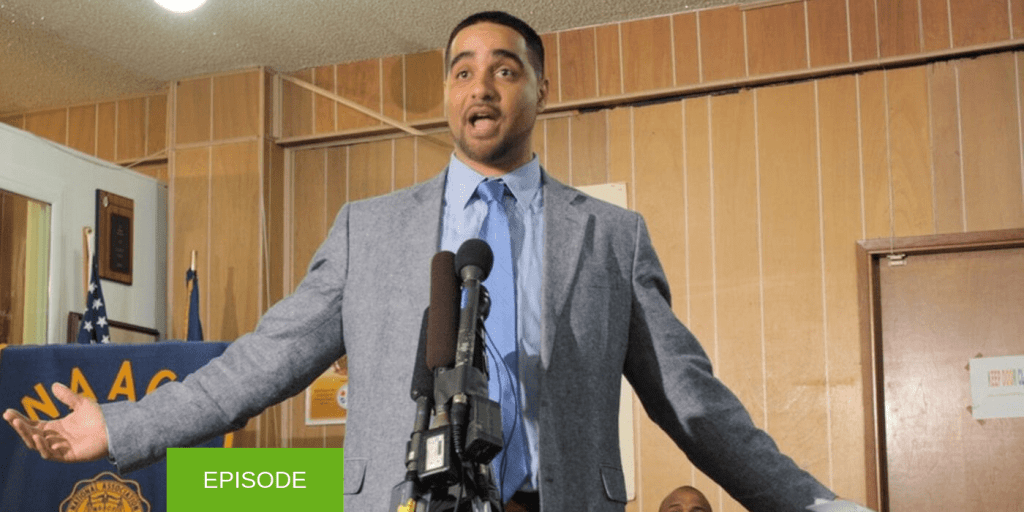
I thought I was there to learn from his “legendary” wisdom; I didn’t realize I was actually witnessing the first act of a play where the lead actor’s ego was the only thing on the script. That ten-minute mark was the first crack in the glass the moment I realized that in this space, “liberation” was less about the community and more about the maintenance of a pedestal.
I didn’t realize yet that the “visionary” pedestal is often built by the silent labor of gender minorities (GMs) who are expected to design the cathedral while the hero stands at the pulpit explaining how he envisioned the light hitting the altar. The “mentorship” quickly revealed itself as a masterclass in Digital Purgatory. I spent hours in Zoom waiting rooms only to be admitted into low attendance meetings so a “hero” could media-train me with his own YouTube clips. It wasn’t disorganization; it was a vibe: the subtle art of letting me know my time was a suggestion, while his ego was a deadline. I’d never be so callous as to assume I had nothing to learn from him, but oh the irony of using organizational time on a Sunday morning to train me in public speaking as if I hadn’t run for public office at the age of 18… I’m not dumb.
The Unilateral Vision: When Ego Replaces Community
These strange behaviours that I began to notice became the group’s actual identity.
I watched as Jesse claimed credit for media outreach in front of the students that I had spent my entire morning manually cultivating from my own cell phone after he explicitly emailed me to do the work. I walked into those meetings expecting a village to break bread with. I brought ideas (dozens of them) offered with the naive belief that a collective would step up to help them grow. Each suggestion was met with immediate, performative excitement, but never with the structural support needed to manifest them. Ideas fell off the agenda as quickly as they were presented, discarded the moment they required more than a nod of approval.
I sat alone in digital breakout rooms meant for community until three people joined the call: myself, a student, and Bruce, the very man who had introduced me to the Washington Ethnic Studies Now (WAESN) before essentially walking out on it himself. (Uh… awkward much?) I once again talked away sharing ideas of community art projects, a Day of Joy, perhaps even a rally at the event location. All ideas fell through as the student grew too busy to attend last-minute meetings, whilst I had to navigate the awkward presence of a man whose sole presence seemed to serve to monitor my work, rather than to contribute.
The “Aha!” moment finally arrived via an email from a “well-intentioned” male educator. He thanked me for my “leadership” (read: my immense labor in scheduling, graphics, and logistics that no one else had the time for.) before gently reminding me that because the others were “full-time educators and students,” their capacity was limited. My willingness to call out needs while simultaneously accepting the assignment only served to indict me as the one expecting too much. The subtext was a clinical burn: my capacity was assumed to be infinite because my labor was viewed as a service I owed to the “real” experts.
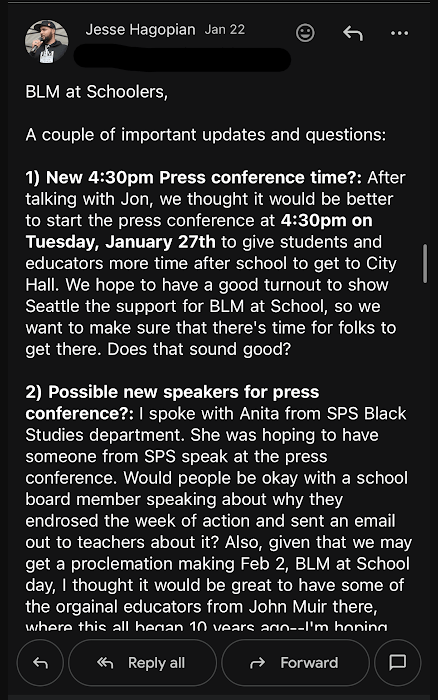
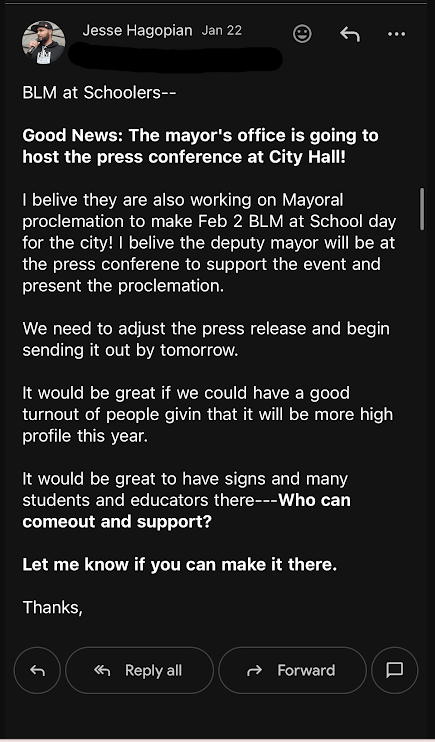
The dysfunction peaked five days before the event when Jesse unilaterally moved the location from a neighborhood library to City Hall and shifted the time. I sat in silence, watching the clock tick, waiting for any “adult” to bat an eye at the absurdity of 11:00 PM email demands and next-day meetings that ignored the schedules of students, educators, and my own professional life.

It became painfully obvious that the vision was a moving target, shifting solely to the whims of one man rather than the needs of the community we were supposedly serving. You could tell immediately that he wasn’t thinking about the students. Moving the venue to City Hall 5 days from the event (away from the accessibility of our original location Rainier Beach for its historic ties to the BBP) was a strategic pivot toward his administrative buddies at Seattle City Hall and district reps. He wasn’t reaching for the youth; he was rubbing shoulders with politicians.
I was being managed by men in the group who confused “flexibility” with the sabotage of my professional reputation.
The lack of basic manners was almost comedic. When I finally did get to deliver the speech the youth in the coalition asked me to make and Jessie conveniently forgot to include during planning, you can literally hear him in the background of my video, chatting away with his friends. He couldn’t even afford me the silence of a spectator; let alone the respect I deserved.
The Pivot to PR: Cowardice and Extraction
The final trigger wasn’t just his ego; it was his cowardice. When community members began calling the coalition out for its lack of response to safety concerns after the shooting deaths of several local teens, the “Hero” didn’t engage in accountability. He did what all brands do when faced with a crisis: he pivoted to marketing.
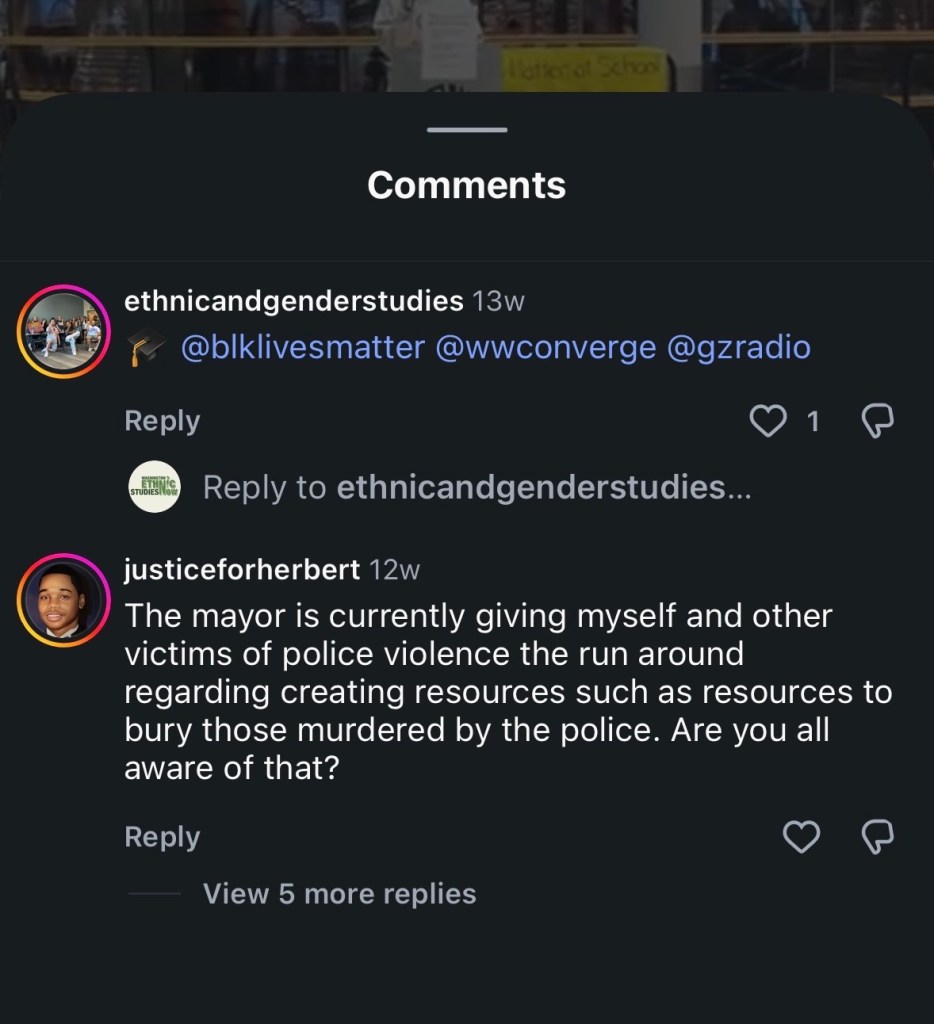

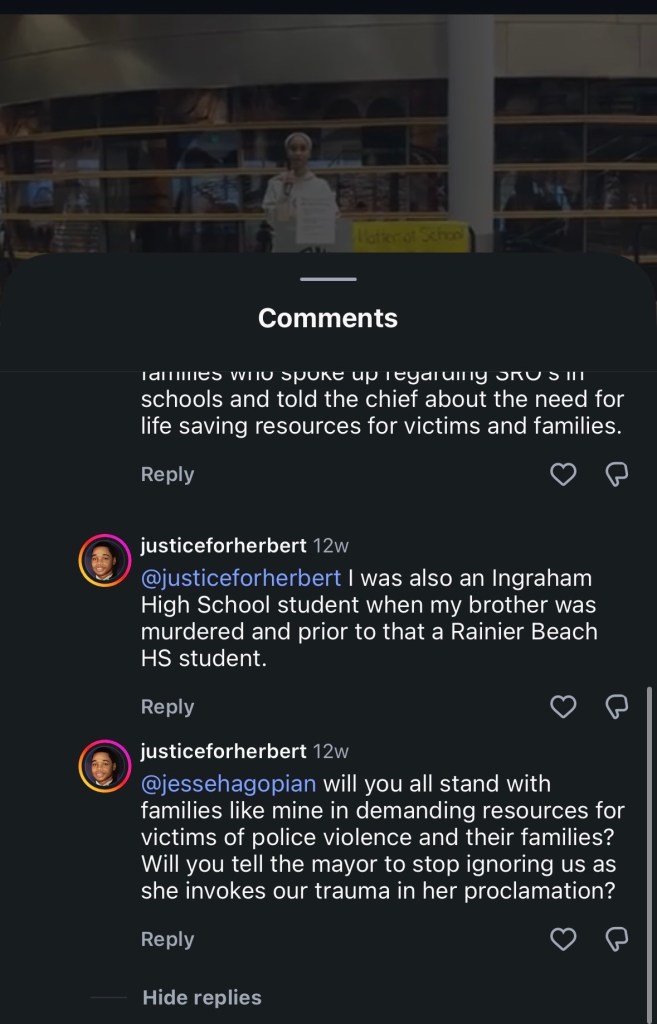
Jesse penned a quick article about himself and the “successes” of the event, plastering the faces of our youth leaders across the page like a human shield across a local gem-toned paper. It was a transparent attempt to manufacture a victory—despite the fact no real change has been made—and overshadow the negative community response he was too terrified to address head on and accept accountability for as the face of the movement. I was and am absolutely disgusted. To use the image of the hard-working youth to paper over your own professional failures is the ultimate act of extraction.
I recognized the red flags from my own curriculum of survival. I realized that my “well-spoken” mask was being used as a buffer for their extraction. When I finally sent the email announcing my leave from the group, I wasn’t just quitting a coalition; I was withdrawing a generosity they never earned. A man is not a hero to me if he cannot respect me as the living, breathing product of the very mission he claims to fight for. I refuse to be tasked by anyone who refuses to understand my character or lived experiences.
I didn’t leave because the work was hard. I left because I refused to let my face, or the faces of the students I cared for, be used as the glitter for a sycophantic PR campaign.
Part three of this blog series will be published in June and will include Tracy’s experiences with the betrayal of cis men of color and our calls to action.
Leave a Reply