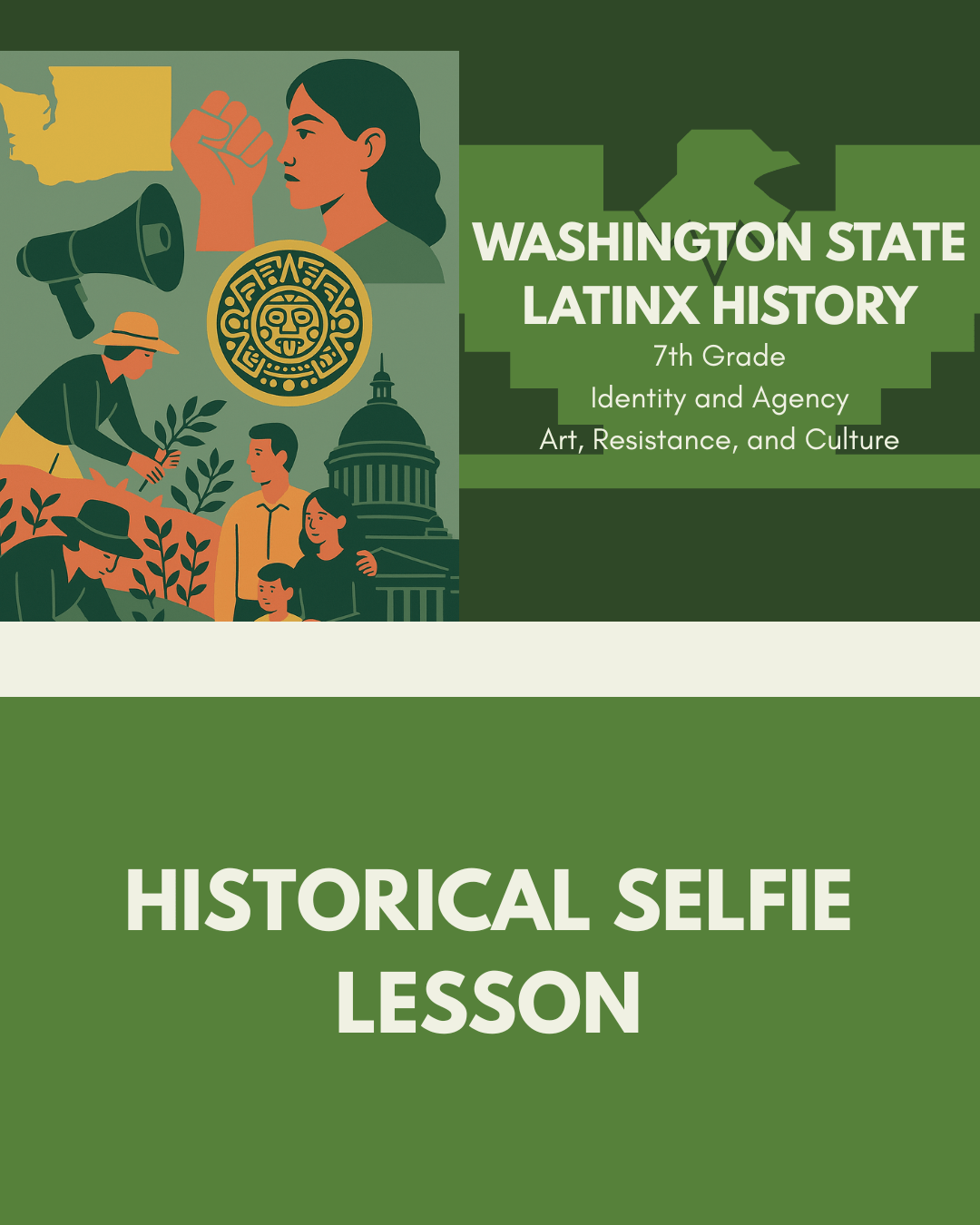
Description
The Historical Selfie invites students to examine themselves as historical beings whose lives are shaped by rhythms of space, time, energy, and power. Grounded in Ethnic Studies and place-based pedagogy, this lesson helps students locate their own stories—and the stories of their communities of care—within broader local and national histories.
Designed for grades 7–10, this 90-minute lesson introduces students to the concept of the Historical Self and the analytical practice of rhythmanalysis. Educators guide students through defining key concepts and collectively analyzing the music video “Strawberry Fields” by La Santa Cecilia, examining how labor, migration, environment, and power appear through recurring rhythms (see pages 3–5).
Students then engage in the core activity: creating a Historical Selfie. Using a personal photograph they choose and feel comfortable sharing, students analyze their own image through a structured graphic organizer, reflecting on:
-
Space (Lugar)
-
Time (Tiempo)
-
Energy (Energía)
-
Power (Poder)
Through discussion and reflective writing, students identify rhythms in their own lives and consider how those rhythms connect to history, labor, values, and belief systems. The lesson intentionally balances personal reflection with critical analysis, supporting students in seeing themselves as part of ongoing historical processes rather than separate from them.
The lesson concludes with written reflection and optional sharing, reinforcing that personal memory, community knowledge, and lived experience are valid and essential historical sources.
What’s Included
-
Full lesson plan with pacing and educator guidance
-
Slides for teaching Historical Self and rhythmanalysis
-
Graphic organizer for the Historical Selfie activity
-
Guided analysis of music and visual media
-
Structured discussion and reflective writing prompts
-
Alignment with WAESN Elements of Liberation, WA State Social Studies Standards, and C3 Framework
Why Educators Use This Lesson
-
Centers students as historical actors, not just observers
-
Integrates personal narrative with rigorous historical analysis
-
Makes abstract concepts like power and labor concrete
-
Encourages critical reflection without requiring disclosure
-
High engagement with minimal additional materials
This lesson is ideal for educators seeking secondary Ethnic Studies curriculum that meaningfully connects identity, history, and community while honoring students’ lived experiences as sources of knowledge.




Reviews
There are no reviews yet.