Description
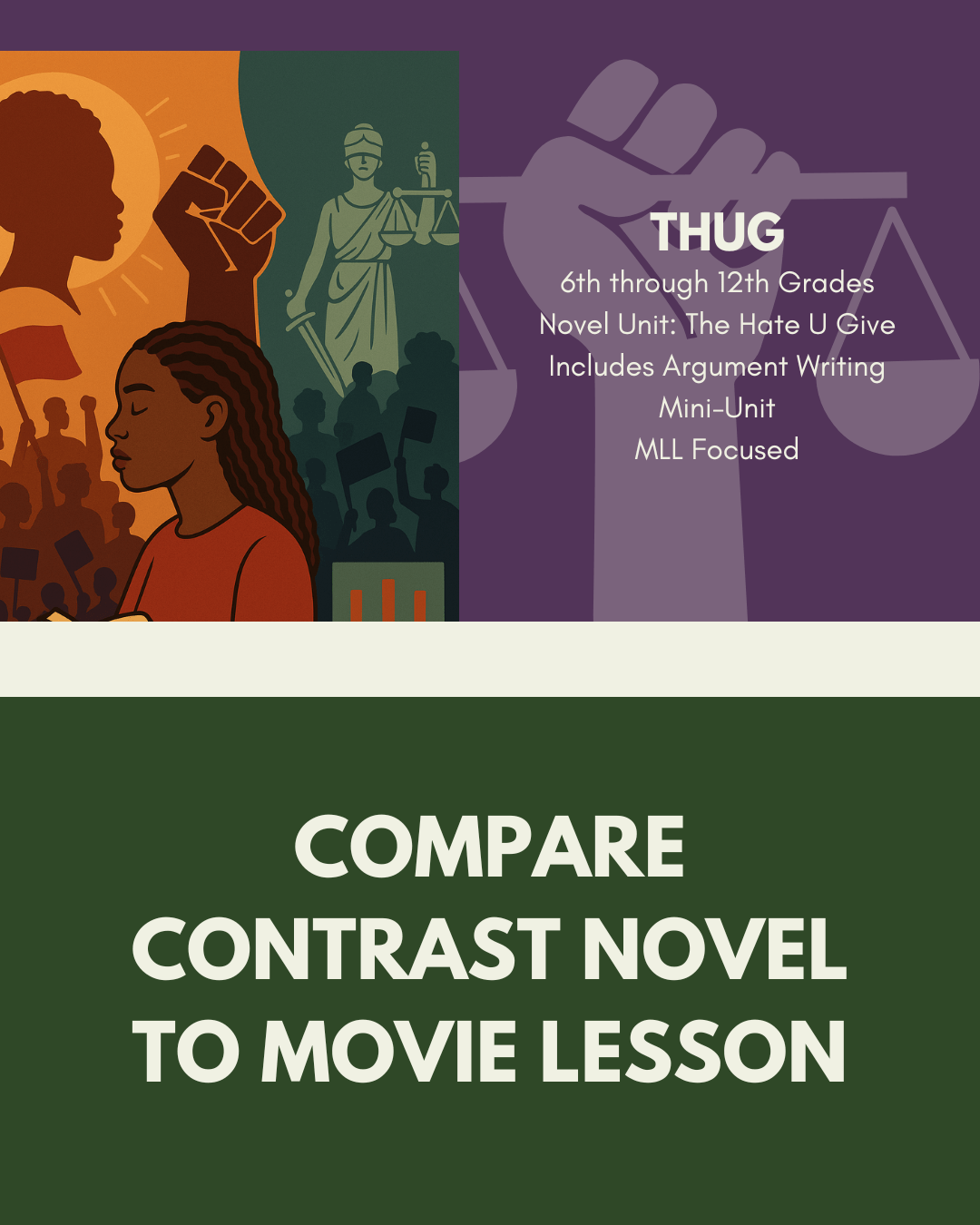
Compare Contrast Novel to Movie provides the critical closure students need after the emotional journey of the book. This lesson challenges students to look beyond the “what” of the story and focus on the “how”—investigating how a director’s choices regarding pacing, omission, and visual storytelling impact the viewer’s understanding of systemic injustice.
The lesson is structured around the duration of the film, supported by the L9. Novel vs Film Movie Notes Sheet to keep students engaged in active viewing. Following the screening, the class engages in a Deep Reflection session, tackling philosophical questions about authority, community obligation, and the nature of good people doing bad things. Students then synthesize their findings into a formal compare/contrast paragraph using a scaffolded rubric and Intertextuality Sentence Starters. The unit concludes with a creative Public Product: a magazine-style review poster where groups present their final verdict on the adaptation to their peers.
What’s Included
-
Comprehensive Lesson Plan covering film analysis, deep-dive discussion, and summative writing.
-
L9. Novel vs Film Movie Notes Sheet to track similarities, differences, and directorial choices.
-
L9. Compare Contrast Paragraph Worksheet & Scaffold providing a clear structure for evidence-based synthesis.
-
L9. Intertextuality Sentence Starters to help students academically bridge the two mediums.
-
L9. Teacher Compare/Contrast Example to serve as a high-level mentor text.
-
Magazine Review Poster Project Guide for a creative, public-facing final assessment.
-
Alignment with WAESN Elements of Liberation (Reflection & Agency) and CCSS ELA standards for comparing a text to its visual representation.
Why Educators Use This Lesson
-
Critical Media Literacy: Teaches students to analyze film as a deliberate construction rather than just passive entertainment.
-
Synthesis of Ideas: Forces students to combine their deep knowledge of the novel with new visual information to create a nuanced argument.
-
High-Stakes Discourse: The Deep Reflection questions push students to apply the novel’s themes to real-world ethics and personal experiences.
-
Creative and Academic Balance: Combines rigorous paragraph writing with the visual creativity of the magazine review poster.
-
Finality and Celebration: Provides a celebratory end to a heavy unit, allowing students to share their expert opinions on a major piece of pop culture.
This is the lesson that turns your readers into critics and your students into social commentators.

Reviews
There are no reviews yet.