
Description
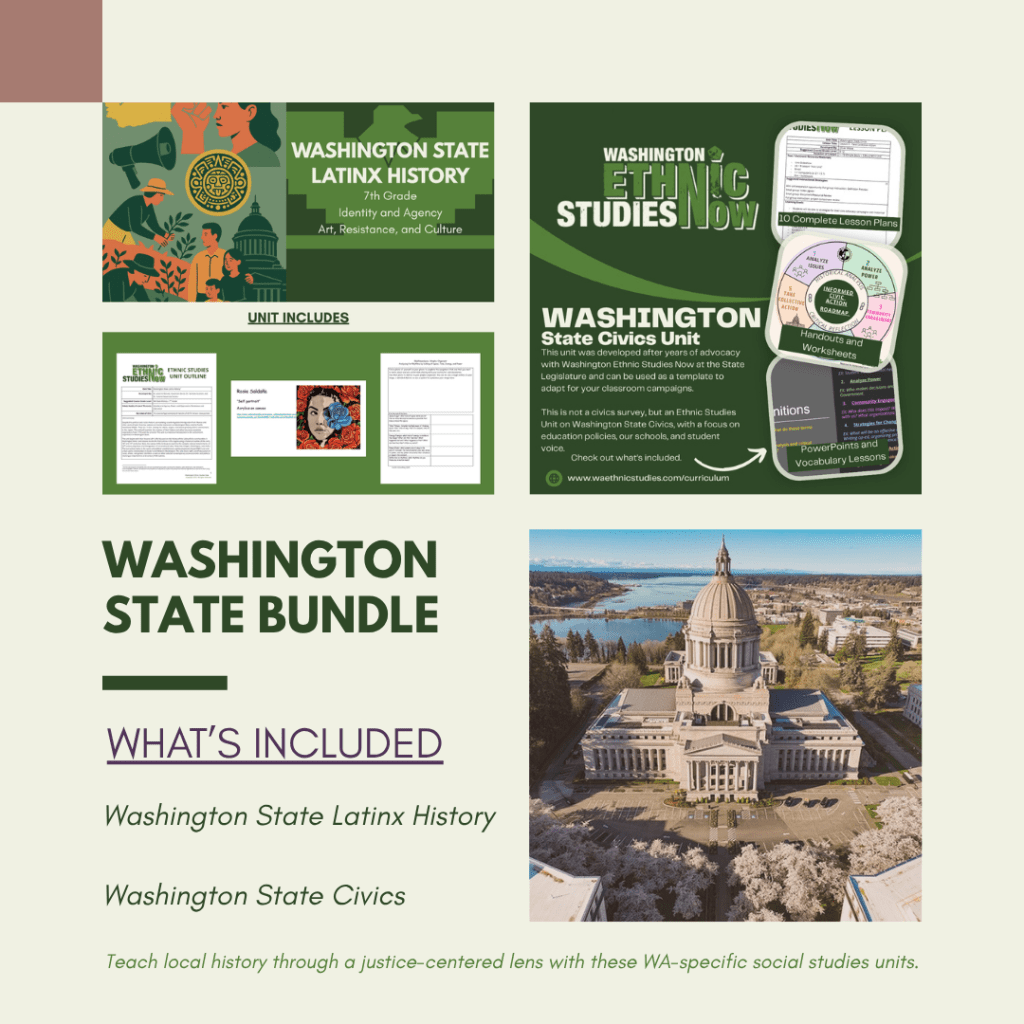
Analyzing Power transforms students from spectators into strategists. By focusing on education policy—the area of government that impacts their lives most directly—students learn to identify who holds the power to make changes and who has the influence to move those decision-makers. This lesson is a deep dive into the Critical Reflection element of the WAESN framework, asking students to look behind the curtain of state-level governance.
Designed for a 75-minute block, the lesson begins with a Power Mapping exercise, a visual tool used by professional organizers to plot stakeholders based on their level of influence and their support for an issue. Students then participate in a Jigsaw Reading activity, analyzing real-world examples of youth who have successfully exercised their student voice to impact policy. The session wraps up with an independent Level of Government Scavenger Hunt, where students use digital resources to distinguish between the roles of local, state, and federal entities in Washington.
What’s Included
-
Detailed 75-minute lesson plan with structured time for modeling, group jigsaws, and independent research.
-
Unit Slideshow (Slides 19-30) featuring visual guides for power mapping and links to government resources.
-
Power Mapping Workshop including graphics and prompts to help students visualize political landscapes.
-
Student Voice Jigsaw Articles—curated case studies of youth advocacy in Washington State.
-
Levels of Government Scavenger Hunt to help students identify the correct avenues of change for their specific advocacy goals.
-
Alignment with WAESN Elements of Liberation (Critical Reflection & Identity) and Washington State K-12 Social Studies standards.
Why Educators Use This Lesson
-
Demystifies Advocacy: Breaks down the intimidating world of politics into a logical map of stakeholders and influence.
-
Focuses on Agency: By studying successful student activists, learners see a reflection of their own potential power.
-
Practical Strategic Skills: Power mapping is a transferable skill used in community organizing, business, and law.
-
Clarifies Jurisdiction: Helps students understand whether their specific issue (like school lunch or environmental laws) needs to be addressed at the city, state, or federal level.
-
Encourages Critical Reflection: Moves beyond “what is the law” to “why is the law this way and who has the power to change it?”
This is the lesson that teaches students that power isn’t just something that happens to them—it’s something they can map, navigate, and eventually, wield.


Reviews
There are no reviews yet.