


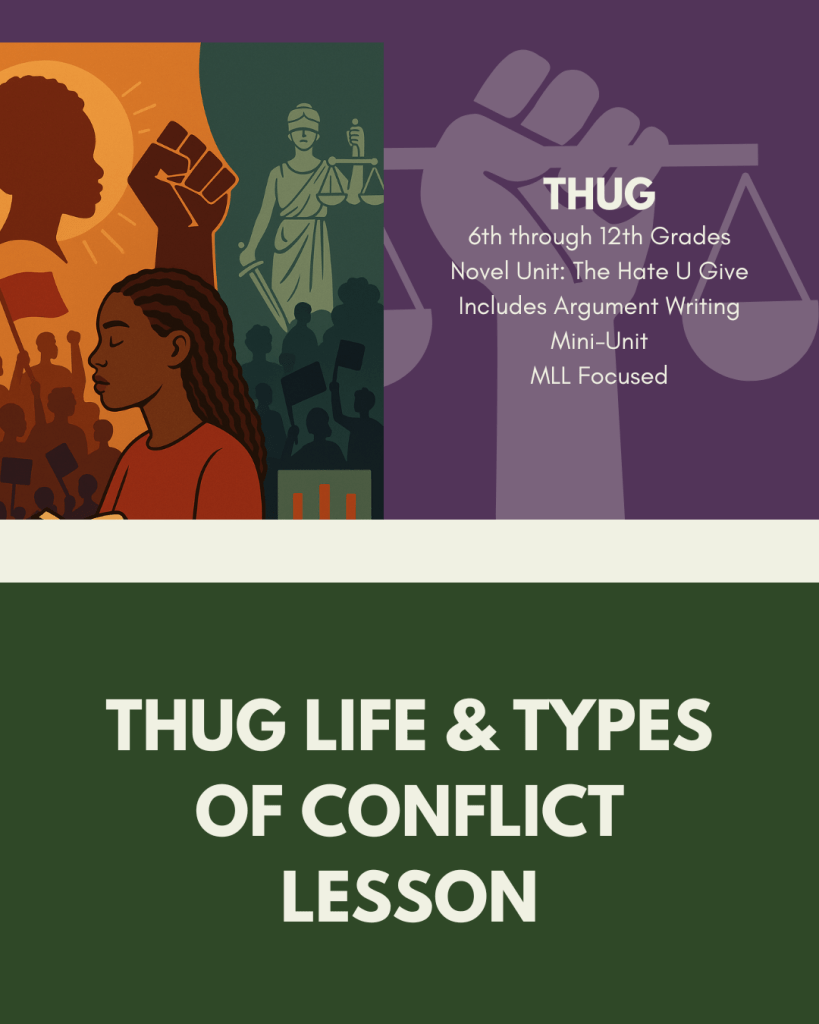
THUG LIFE & Types of Conflict is the conceptual heart of The Hate U Give unit. This lesson bridges the gap between 90s hip-hop philosophy and modern-day social justice, teaching students that the “Hate” Angie Thomas writes about is an acronym for a cycle of systemic neglect. By watching interviews with the author and PBS Newshour clips, students investigate how the novel tackles race, policing, and the necessity of code-switching for survival.
Designed for a 90-minute block, the lesson utilizes an Interactive Read-Aloud of a pivotal excerpt from Chapter 10. Students annotate for evidence of “THUG LIFE” (The Hate U Give Little Infants F***s Everybody) and identify various types of literary conflict. The lesson culminates in a rigorous writing workshop where students craft a 7-14 sentence paragraph, integrating direct quotes and personal analysis to explain how the cycle functions in the characters’ lives and in society at large.
What’s Included
-
Detailed 90-minute lesson plan featuring gathering space routines and read-aloud protocols.
-
L5.THUG LIFE Read Aloud excerpt from Chapter 10, formatted for student annotation.
-
L5.THUG PBS Video Questions to scaffold media literacy and active viewing of the Newshour segment.
-
Types of Conflict Guide specifically adapted to include Systemic Conflict alongside internal and external struggles.
-
L5. Writing About Reading Rubric (Grade 8 aligned) to guide the drafting of the “THUG LIFE” claim paragraph.
-
Code-Switching Discussion Guide to explore the complexities of identity and survival in different social spheres.
-
Alignment with WAESN Elements of Liberation (Injustice & Resistance) and CCSS ELA standards for determining theme and analyzing character development.
Why Educators Use This Lesson
-
Deepens Thematic Understanding: Moves students from reading a story to analyzing a message, ensuring they understand the systemic critique at the novel’s core.
-
Cultural Responsiveness: Validates the influence of Tupac Shakur and hip-hop culture as legitimate academic subjects.
-
Teaches Narrative Complexity: Helps students identify that Starr’s conflict isn’t just with an individual, but with an entire system—a key tenet of Ethnic Studies.
-
Scaffolded Academic Writing: Provides a clear structure for a lengthy, evidence-heavy paragraph, pushing students toward high-school-ready writing stamina.
-
Interactive and Collaborative: Uses Turn and Talk and gathering space strategies to keep students engaged and moving throughout the analysis.
This lesson ensures your students see the cycle, so they can learn how to break it.