


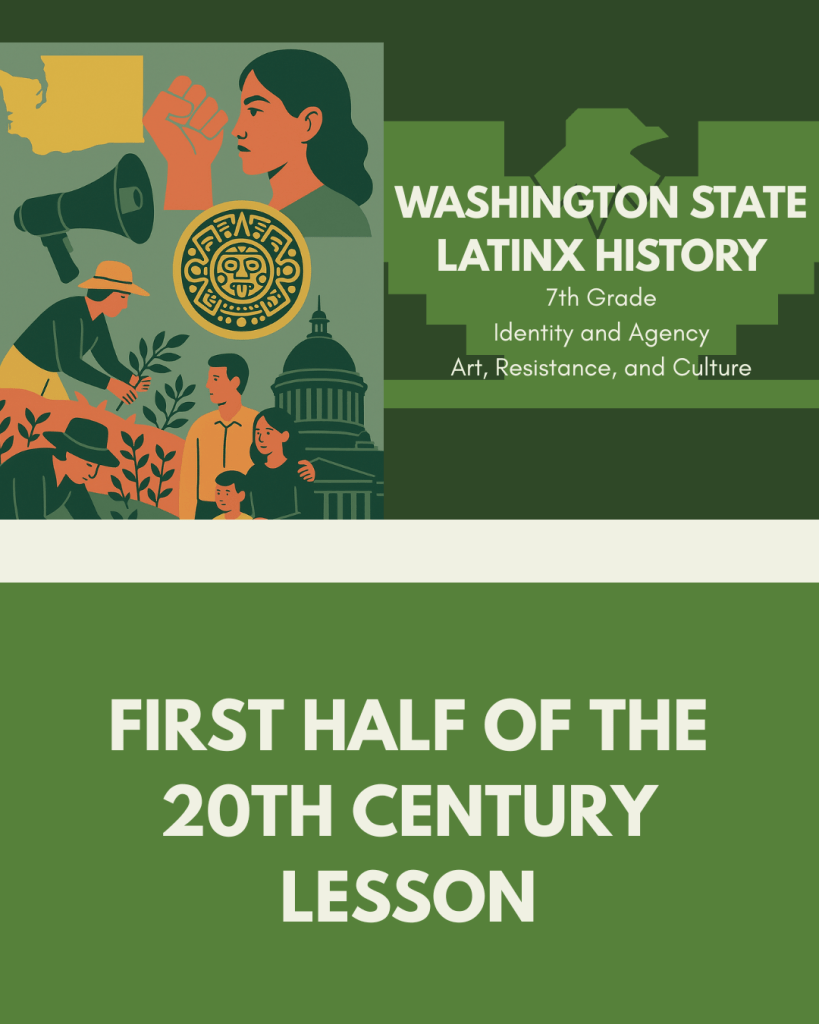
First Half of the 20th Century moves the timeline into the era of industrial agriculture and systemic migration. This lesson focuses on the Power and Oppression framework, examining how the demand for labor during World War II led to the creation of the Bracero Program. Students investigate how this program wasn’t just about work—it was about the permanent settlement of Chicano communities in the Yakima Valley and beyond.
Designed for a 40-minute block, the lesson utilizes Dr. Gonzalo Guzmán’s research to highlight the Wapato-Harrah area as one of the oldest and most significant Latino settlements in the Pacific Northwest. Through guided discourse, students analyze the push and pull factors of migration and the harsh reality that labor contracts did not always equal fair treatment. The lesson bridges historical activism with the present by having students compare 1960s Latinx labor strikes to contemporary movements, such as the WGA or teacher strikes.
What’s Included
-
Detailed 40-minute lesson plan with specialized student discourse support for facilitating sensitive topics.
-
Timeline Graphic Organizer Integration to continue mapping the 20th-century surge in Latinx population.
-
Bracero Program Case Study focusing on the recruitment of Chicano workers by Washington companies.
-
Labor Resistance Module connecting historical Latinx activism to modern labor protections and strikes.
-
Guided Questioning Guide to help students evaluate the dependency of Washington farmers on Latino labor.
-
Free Write Formative Assessment to monitor student understanding of the shift from temporary labor to permanent community settlement.
-
Alignment with WAESN Elements of Liberation (Power/Oppression & Resistance) and 7th Grade WA State History standards.
Why Educators Use This Lesson
-
Localizes the Civil Rights Movement: Shows students that the fight for justice wasn’t just happening somewhere else—it was happening in the fields and towns of Washington.
-
Economic Analysis: Helps students understand that the development of Washington State’s economy was (and is) inextricably linked to Latinx labor.
-
Critical Thinking: Encourages students to see the hidden history of long-standing settlements like Wapato-Harrah.
-
Relevance: Directly connects the history of labor injustice to the labor issues students see in the news today.
-
Efficiency: Packaged to fit into a standard 40-minute period while maintaining deep academic rigor.
This is the lesson that shows how the struggle for fair labor built the foundations of our state.