



by Asuka Conyer and Tracy Castro-Gill, Ph.D.
This blog post, the first in a series, is being co-written by Asuka Conyer, Director of Development and Programs for WAESN, and Tracy Castro-Gill, Ph.D., Executive Director of WAESN. Tracy is mixed-race Xicanx and is femme-presenting agender. Asuka is a mixed-race Japanese and Dominican woman.
This blog post has been in the works for several months now. We kind of put it on hold after the Cesar Chavez rape revelations, and while we were deciding on how to move forward with it, another cis man of color in the Ethnic Studies movement, Dr. Sean Arce, was named in a case of domestic violence. We feel like we are now ready to tell our stories. They are not the physical violence perpetrated against Delores Huerta and Dr. Irene Sanchez. They are, however, stories of silent violence and erasure.
It is an exhausting irony to dedicate one’s life to liberation while navigating the very hierarchies we claim to be dismantling. There is a specific brand of rage reserved for the gender minorities (GM) of color in advocacy: a professional with sharpened patience for having to calculate, before every meeting, which parts of our identities are palatable enough to enter the room and which must be left at the door to keep the peace.
We are profoundly over the performance. We are done with cis men who lean into their own fetishization and the hollow fallacies of power, masquerading as leaders while their hands and their egos remain an unchecked epidemic. It is a sickness that GMs like us are often driven to the extreme…dreaming of isolation, of creating spaces where men simply do not exist….not because we desire segregation, but as a desperate act of self-preservation.
We want to tell our stories of experiences where cis men of color have been elevated, by themselves or others, as the face of activism at the expense of our hidden or intentionally suppressed labor. While white men also do this, we are specifically calling out cis men of color because of the hypocrisy of their actions. Men, like Chavez and Arce, who claim to fight oppression and then use their positionality to oppress GMs is a special kind of betrayal.


We want to call out these betrayals and remind readers that violence takes many forms. Physical violence is the most obvious and not the only form. The kind of violence we have experienced through erasure and attempts at character assassination cause emotional and psychological damage that often leads to physical harm. This harm is exacerbated when we recognize that nobody is coming to save us, so we continue to do the work in the face of the violent behaviors of cis men of color in our movement spaces, eventually leading to burnout—and in extreme cases, psychological breakdowns and medical emergencies.
The Dynamics of
Erasure and Exploitation
As antiracist nonprofit leaders, we are frequently in spaces with other antiracist nonprofit leaders and their staff. These spaces are overwhelmingly populated by GMs of color, providing evidence that we are the cogs that keep grassroots advocacy and organizing alive. Most of the time, the systems we are fighting against on a professional level are the exact systems that are oppressing us on personal levels. We cannot begin to describe the intense emotional and psychological labor it takes to navigate these dynamics. And still, these GMs are some of the most welcoming, collaborative, and principled people I’ve ever met. It’s a joy to work with them.
On the flip side of this, I, Tracy can’t honestly name a single cis man of color who leads a nonprofit organization (or even works for one) that has been as ready to support the work of others as the GMs of color I’ve worked with. The few cis men of color I do know and have worked with in organizing spaces, are mostly involved in for-profit (and self-aggrandizing) work. They tend to only want to collaborate when it involves increasing their visibility. It is rare to have a cis man of color offer to roll up his sleeves and do the work I see GMs of color doing every day.
It shouldn’t come as a shock that it absolutely comes as a shock to cis men of color that their experiences with racism aren’t the only kinds of oppressive experiences. I believe this is why they are so comfortable with owning the spotlight, not deferring to intersectionally marginalized leaders, and not naming the GMs that do the behind-the-scenes work. They are so caught up with their one-dimensional experiences of oppression that they forget about—and sometimes intentionally leverage—patriarchy.


These behaviors and their outcomes suck, but they are only made possible by people like you—the consumer of their products. These men wouldn’t be able to commit violence against GMs of color unless you uncritically swallow the brands they’ve created in their images. I promise you, that if you barely scratched the surface, you would find GMs of color who have been doing what these men have been saying.
Look, most of us don’t do what we do for recognition, and we need to make a living. Part of that requires evidence that the work we do is leading to tangible results. Whether we need to successfully bid for a contract, be awarded a grant, or land a job interview, we need potential funders and employers to see that we actually did the things we say we did. When cis men of color accept undue credit for our work, the professional and economic toll, in addition to the emotional and psychological toll, is devastating.
Erasure and Abuse of
Power in Organizing
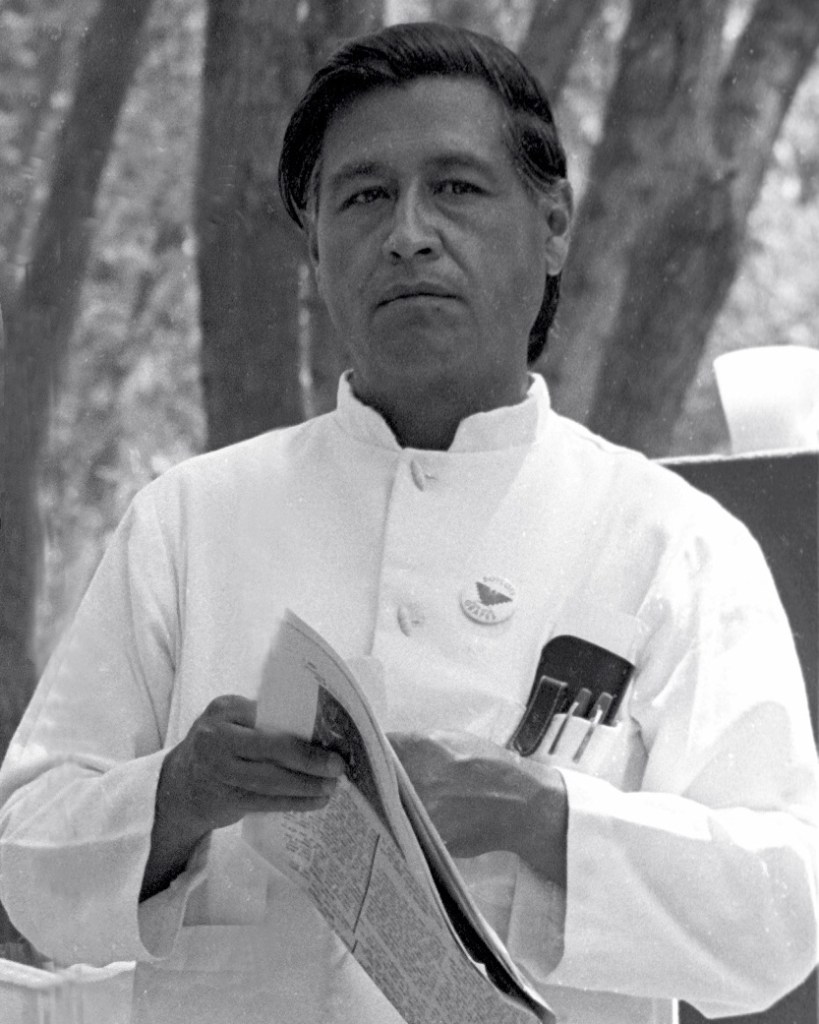
I, Tracy, grew up learning about Cesar Chavez, but I didn’t hear of Dolores Huerta until at least university level, and I grew up in Southern California in predominantly Mexican-American communities. When I read about her, it became evident that she was the backbone of the movement while Cesar was the face. Later, I learned about Cesar’s ugly politics, which is a clear indication that his gender was the only thing that lifted him into the spotlight.
What struck me the most about Huerta’s revelations of violence she endured at the hands of Chavez was her rationale for why she kept it a secret for so long: she knew it would hurt the movement. We talk a lot about why rape victims and other victims of violence don’t speak up, but we usually focus on how we won’t be believed, we’ll be victim-blamed, the shame and grief of having to re-tell the stories, etc. But this… I felt this on a bone-deep level, because I have also refrained from publicly calling these men out for the same reason, and doing so on less extreme acts of violence allows for the suppression of the most egregious types.
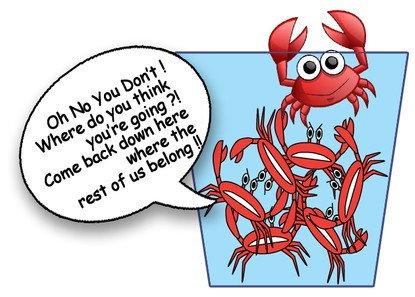
I know that, in telling my stories, there will be those of you out there that will call this a case of crab-potting instead of relational accountability, which is why I have refrained from speaking openly about it. When I’ve shared my frustrations in private conversations, I’ve either a) heard from other GMs of color that they’ve experienced the exact same behavior from the exact same cis men of color, or b) heard from cis men things like, “Yeah, but he does so much good work,” “It doesn’t matter who gets credit,” “He brings a lot of needed attention to the cause,” or worse, “You are exaggerating,” “This is why you’re hard to work with,” and, “You’re being too emotional about it.”



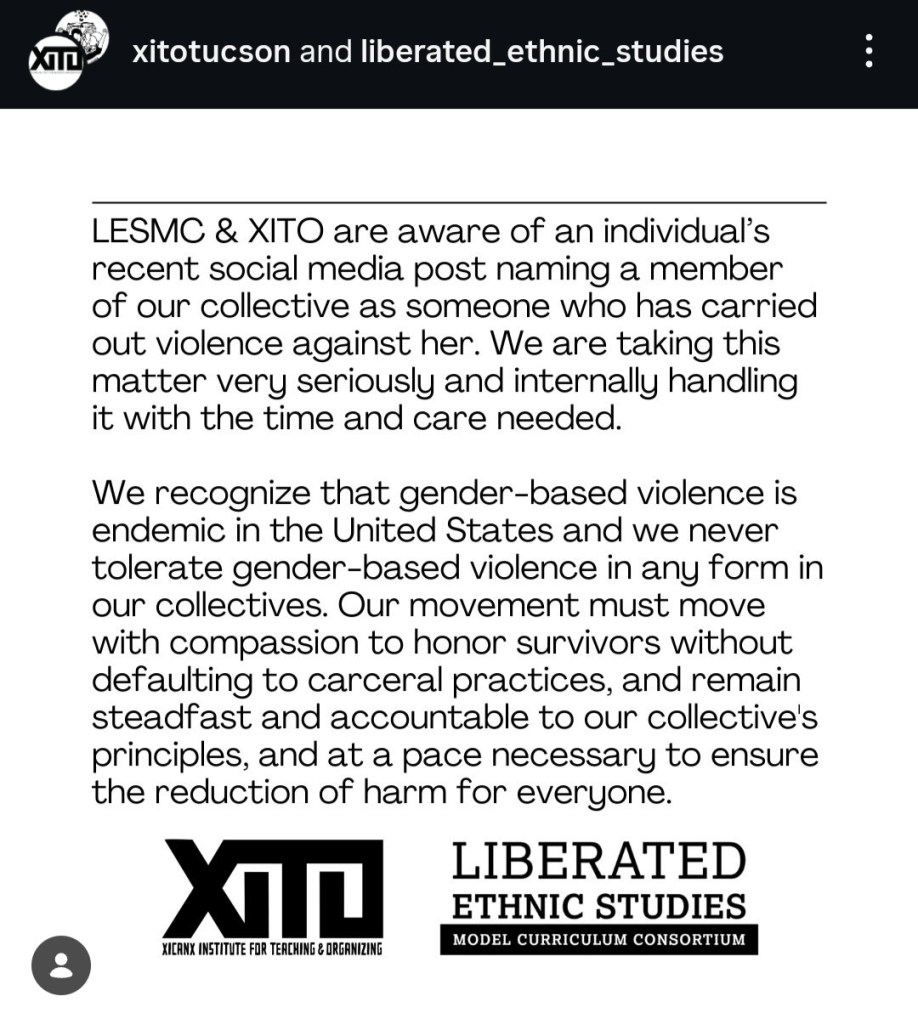
The thing is, Delores wasn’t the only person keeping this to herself. There were others around her and Chavez who also held their tongues; who did nothing to keep the GMs in their work safe from a known abuser. The story told by Dr. Irene Sanchez about Sean Arce tells a similar story. Even the way XITO addressed her evidence against Sean was a non-admission and non-apology. Sean appears to have voluntarily stepped down from XITO claiming to want to protect the work. Sound familiar? Protect the work, not protect GMs in the work.


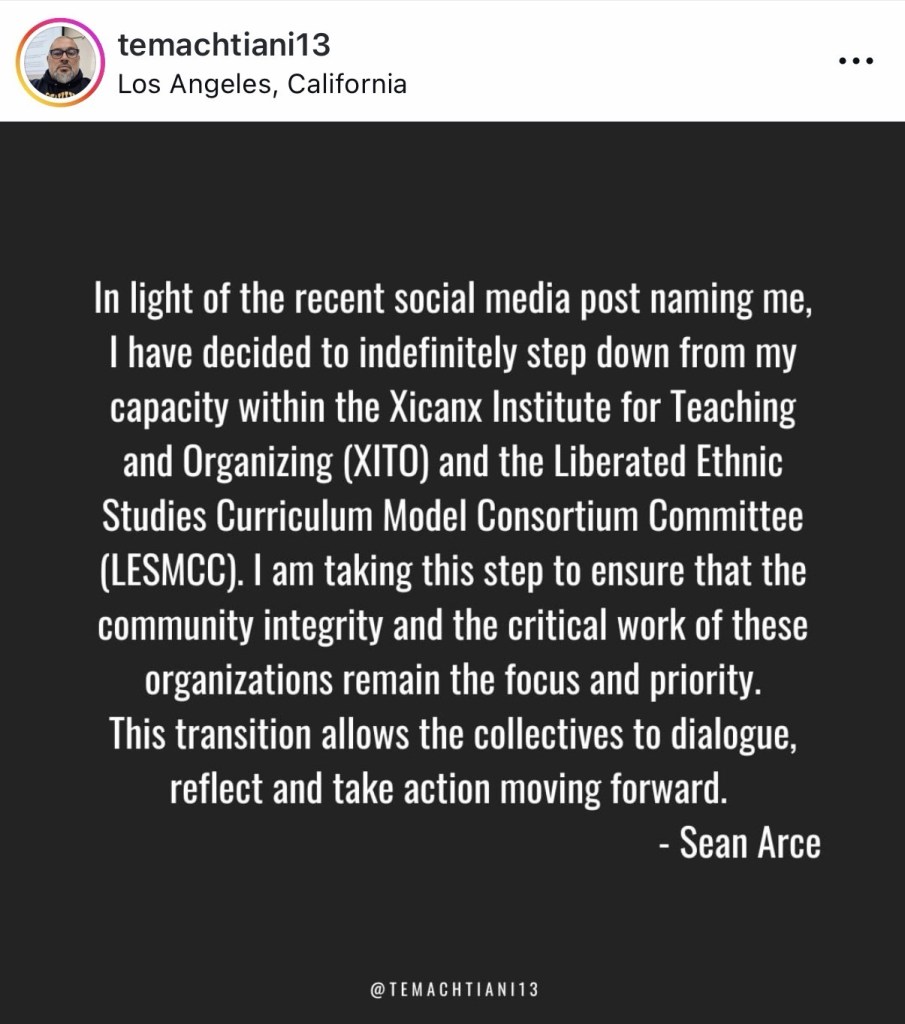
Remember when we said consumers of information are at fault? Here’s where I, Tracy, admit to some blame in this situation. I have had dealings with XITO where I have brought instances of how their business practices harm the movement for Ethnic Studies in Washington state. They come in as an outside professional development provider with no stake in the political game in local politics with the appearance that they are politically neutral, and therefore, safe in the eyes of district and state leaders. Whereas WAESN, who lives and works here and is extremely active in local politics, is blacklisted from many contract opportunities that would allow us to continue our political advocacy to support K–12 Ethnic Studies in our state.
Meetings with Sean and others in XITO about these facts have been hostile. WAESN has asked them to at least bring us alongside them in their work in our state, and they refused, calling us competition. I have never seen XITO as competition. I have seen them as a valuable member of the movement for Ethnic Studies. I was wrong. Instead, they behaved as if they were above being held accountable for their harm, even refusing to have a mediated restorative conversation. And because I did not speak out, I proved them right. This is part of the reason they feel they can offer non-apologies that only continue to protect an abuser. For this, I am sorry, and I will work to be more vocal about the harm being done inside of our circles.
The Radical Grift
The tragedy is that this exhaustion is exactly what cis men in power bank on. They want us to excuse ourselves from the table. Every day, GMs face a necrotic sacrifice: either surrender our autonomy to maintain our seat or walk away to build from scratch (assuming we even have the support of a community to catch us).
I, Asuka, am fully aware that my next few statements are going to upset the very people who consider themselves the vanguard of this movement. I am also fully aware that I do not care.
As a gay, Black and Asian woman, my existence in these spaces is governed by a heightened sense of perception. A specific byproduct of navigating the overlapping veils of my intersectionality like many others. Call it a repellent to the spell, but I am no longer susceptible to the performance. I am exhausted by the recurring phenomenon of cis-het men, particularly men of color, and (let’s be direct) some Black men in leadership who lean into a hero myth.
They allow themselves to be pedestaled, tokenized, and even fetishized by the (largely white) progressive machine, precisely because it grants them a pass to never lift a finger in the actual work.
I have seen it happen too many times to remain polite about it. It is a calculated trade: they offer their faces for the brochures and their voices for the press conferences, while they outsource the logistics, the care, and the labor to the very GMs they claim to be liberating. Anyone who wants to claim this dynamic doesn’t exist can argue with a wall. GMs in advocacy are elite at keeping the receipts.


The “community pillar ” persona becomes a shield for their personal brand, a way to remain beyond reproach while practicing a style of organizing that is extraction masquerading as empowerment. They’re everywhere, every rally, every march, every photo op.
They. Are. Their. Own. Brand.
They aren’t building a village; they are building a fan club. And they are doing it on the backs of GMs like us who they assume will be too, “well-spoken,” and, “grateful for the opportunity,” to ever call it what it is: The Radical Grift.
This post is only the beginning. We will be sharing our own stories of erasure and harm at the hands of cis men of color in the coming months. We will be naming names, because we refuse to enable these men further. You know who you are… hit us up if you want to talk.
Stay tuned.